 Michael Mozzhechkov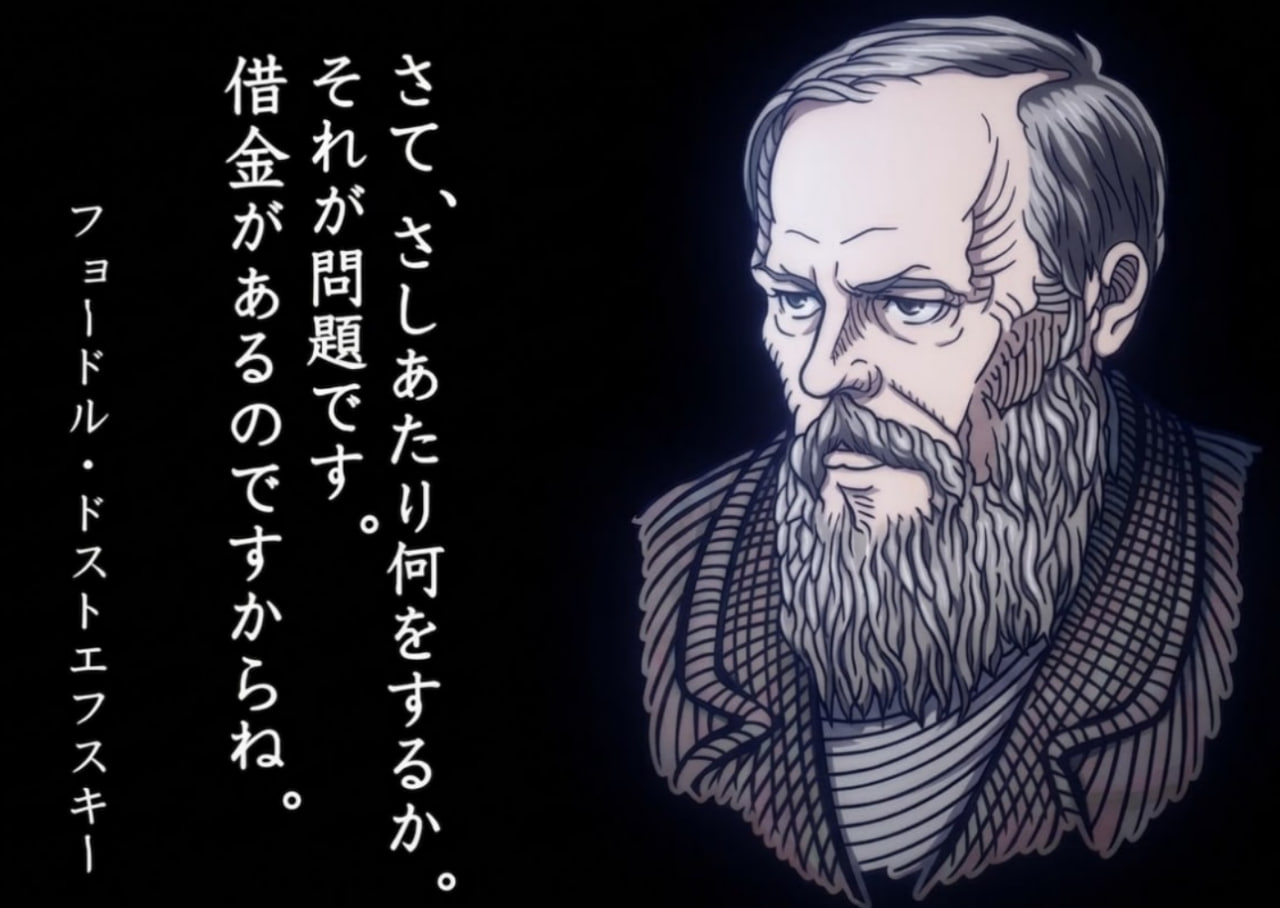
Dedicated to Dostoevsky Days: August 7 to 16, 2026, in Tokyo and Osaka.
The enduring fascination of the Japanese public with Fyodor Mikhailovich Dostoevsky is not merely a niche literary preference but a cornerstone of modern Japanese identity.
For over a century, Dostoevsky has served as a mirror for a nation navigating the turbulent waters of rapid modernization, cultural alienation, and existential dread. From the first tentative translations in the Meiji Era to the record-shattering “bestseller” status of The Brothers Karamazov in the twenty-first century, the Russian master’s presence in Japan has been characterized by intense, periodic “booms” that reflect the shifting anxieties of the Japanese people.
Roan Uchida, despite not being a specialist in Russian studies, was the first to translate Crime and Punishment into Japanese in 1892. Working from an English version, Uchida nonetheless captured the essential “Russianness” of the text.
The popularity of Dostoevsky in Japan has not been a steady climb but rather a series of explosive waves, each corresponding to a specific moment of national crisis or social change. Japan has experienced at least six major Dostoevsky “booms”.
In November 2006, a new translation of The Brothers Karamazov by Ikuo Kameyama hit the shelves, sparking what remains the most significant literary event in recent Japanese history. This five-volume set sold a staggering 1.25 million copies, a figure that is virtually unheard of for nineteenth-century classics. The “Kameyama Boom” was not merely a result of marketing but a fundamental rethinking of how a classical text should be presented to a modern audience. The success of this translation led to a broader resurgence in Russian literature, including new translations of Notes from Underground, Crime and Punishment, and Demons.
Crime and Punishment has historically been the most frequently read book in Japan, often topping lists of classic literature. Raskolnikov’s internal struggle with guilt and redemption resonates with the Japanese sense of social and personal responsibility.
One of the most curious aspects of Dostoevsky’s status in Japan is the persistent link to the composer Pyotr Ilyich Tchaikovsky. To the Western observer, this might seem like a simple case of pairing famous Russians, but in Japan, the connection is deeply rooted in linguistics and popular humor.
The Japanese transliteration of the names—Dos-to-efu-suki (ドストエフスキー) and Chai-ko-fu-suki (チャイコフスキー)—contains a phonetic element that is a gift to punsters. The suffix -suki is homophonous with the Japanese word suki (好き), which means “to like” or “to love”. This has led to a long-standing tradition of schoolroom jokes where students claim to “Dosto-love” or “Tchaikov-love” their favorite subjects. This linguistic quirk has effectively “Japanized” these figures, making their formidable names feel familiar and even affectionate to the average person.
Beyond the jokes, both artists tap into a sense of “nostalgia” (nostalgiya) that resonates with the Japanese concept of mono no aware (物の哀れ), a Japanese aesthetic term translating to “the pathos of things,” referring to a deep, bittersweet awareness of impermanence.
The “pain of nostalgia” in Russian music and literature mirrors the “pain of the heart” in traditional Japanese aesthetics. Both Dostoevsky and Tchaikovsky are seen as geniuses who created their own inspiration to give voice to the nameless suffering of the masses.
The “imprint” of Dostoevsky on Japanese literature is so pervasive that it is difficult to find a major modern author who has not been influenced by him.
Ryunosuke Akutagawa, the master of the Japanese short story, frequently turned to Dostoevsky as a roadmap for exploring moral ambiguity. One of the most famous examples of this influence is the striking similarity between Akutagawa’s “The Spider’s Thread” and the “Tale of an Onion” in The Brothers Karamazov. Both stories feature a single, small act of mercy (giving an onion to a beggar or sparing a spider’s life) as the sole potential means of salvation from hell—and both explore how the inherent selfishness of the human heart ultimately thwarts that salvation.
For Osamu Dazai, Dostoevsky was not just an influence but a spiritual kin. As a leading figure of the Buraiha (無頼派, “School of Irresponsibility and Decadence”) generation, Dazai identified deeply with Dostoevsky’s “Underground Man”—the alienated, self-destructive individual who refuses to conform to a rational society. Dazai’s masterpieces, such as No Longer Human and The Setting Sun, echo the Dostoevskian theme of finding a “terrible beauty” within the ugliest depths of the human psyche. His characters are perpetually “sinking,” yet they possess a clarity of vision that is only possible from the bottom of a hole.
In the contemporary world, Haruki Murakami has emerged as a major advocate for Dostoevsky’s continued relevance. Murakami has explicitly stated that The Brothers Karamazov is a work of “absolute balance”. In his novel 1Q84, a character argues that in Dostoevsky’s world, “good and evil are not fixed, stable entities, but are continually trading places”. Murakami suggests that the most important moral task is not to eliminate evil but to maintain the balance between these two shifting forces—a theme that permeates his own dualistic and surrealist worlds.
The visual impact of Dostoevsky’s prose has also been captured by Japanese cinema. The legendary director Akira Kurosawa famously adapted The Idiot to film. Kurosawa’s interest in Dostoevsky predated his international success with Rashomon, and he saw the Russian author as a master of depicting the tension between internal impulses and societal duties.
Despite his reputation for grimness, Dostoevsky is also a source of significant humor and gossip in Japanese literary circles. His chaotic personal life—marked by gambling, debts, and narrow escapes—is often discussed with a mixture of amusement and sympathy.
Dostoevsky’s personal obsession with tea has also achieved a certain “meme” status. His famous line from Notes from Underground—”I say let the world go to hell, but I should always have my tea”—is frequently quoted by Japanese readers as the ultimate expression of “underground” selfishness. In some Japanese university circles, being a member of a “Dostoevsky Study Group” (Dos-ken) involves not just reading the books but adopting the “Dostoevskian lifestyle,” which often translates to drinking excessive amounts of tea from a samovar and getting into arguments about morality until 4:00 AM.
Japanese love for Dostoevsky is rooted in a unique intersection of linguistics, historical trauma, and cognitive evolution. By providing the tools for the modern Japanese language to express the “unspeakable” anxieties of the soul, Dostoevsky became more than a foreign author; he became a native voice for the alienated individual in a modernizing state.
Ultimately, Dostoevsky remains popular in Japan because his work suggests that “balance” is the only true morality in a world of shifting good and evil. As long as society continues to produce confusion, guilt, and existential angst, the Japanese people will continue to turn to the Russian master for a toolkit to navigate the storm.
 Robert Reich
 Dmitri Drobnitsky
 Vladimir Morozov