 Yuri Chekalin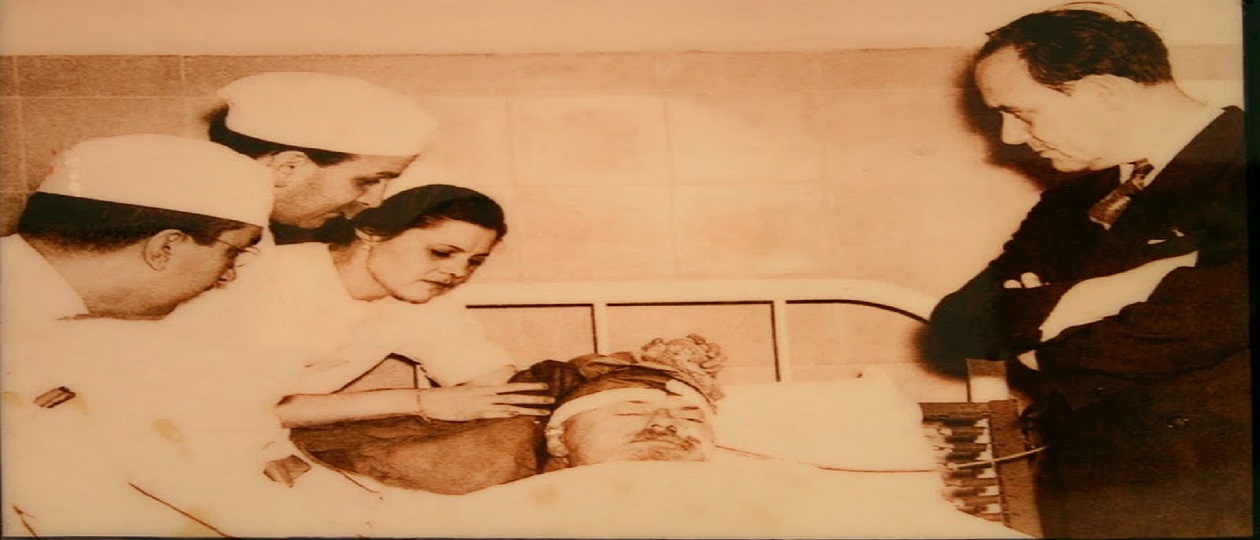
The circumstances of Lev Trotsky’s death have long attracted the attention of researchers.
It’s no secret that Ramon Mercader, who fatally stabbed the leader of the Fourth International with an alpenstock on August 20, 1940, was not just a lone fanatic, but a tool of the USSR’s state security agencies.
However, knowing the details of the operation to eliminate Trotsky and the names of the people who prepared and carried it out, it’s hard to say that everything is completely clear. First of all, it’s necessary to thoroughly understand the specific circumstances that led to Trotsky’s death.
The widely circulated version (most vividly reflected in the works of D.A. Volkogonov) that Stalin and his entourage secretly sentenced Trotsky to death in the mid-1920s is hardly convincing. Under their orders, the OGPU-NKVD secret services allegedly hunted Trotsky from the first days of his exile abroad (he was expelled from the USSR in February 1929) and carried out his execution in August 1940.
This version, despite its apparent logicality, raises a number of questions that cannot be answered clearly. Let’s assume that Trotsky’s fate had indeed been sealed long ago. But wouldn’t it have been simpler to eliminate him in the USSR, perhaps by staging some kind of “accident,” rather than exiling him abroad, where the elimination of such a prominent figure could have been fraught with problems and sparked an international scandal? If we accept that Trotsky’s elimination was planned for after he was abroad, how then can we explain that it was only carried out in the twelfth year of his exile? It is difficult to imagine that the relevant services were given unlimited time to carry out the task. The Kremlin’s patience seems entirely inexplicable considering that, from the very first days of Trotsky’s stay abroad, it was clear he would never capitulate, but would attack Stalin, his entourage, and the Comintern even more fiercely.
From a technical standpoint, carrying out a terrorist attack against Trotsky would likely not have presented any particular difficulty for the Soviet secret services. During his first ten years abroad (in Turkey, France, Norway, and the first two years of his life in Mexico), Trotsky, as he himself admitted, had no serious security. Only in 1939 did he take refuge in a house on Calle Vien in Coyoacán, a neighborhood of Mexico City that his supporters and the Mexican police had transformed into a veritable fortress. However, neither the high concrete wall, nor the searchlights, the complex alarm system, nor the platoon of guards saved him. And again, one cannot help but ask the question: why was Trotsky not touched when it was relatively easy to eliminate him, but why did they only begin to show activity when the conditions became, in general, unfavorable?
One more consideration should be added to the above. According to documents made public in recent years, Trotsky was under the surveillance of the OGPU-NKVD for a long time, at least since 1933. Soviet intelligence agents were constantly present in his own entourage and that of his son, L.L. Sedov, thanks to whom Moscow was aware of Trotsky’s exact location, who was guarding him and how, what he was doing, and even what he intended to undertake and publish in the near future. With such information, carrying out the “action” would have been straightforward. Nevertheless, nothing was undertaken until 1940.
The answer to all these questions apparently lies in the fact that no decisions were made to physically eliminate Trotsky before 1939, and most likely even before January 1940, and the Soviet secret services received no orders to this effect. The legend of a death sentence handed down in the mid-1920s, originating from Trotsky’s own pen, bears no resemblance to what actually happened. Equally untrue is the version that has appeared in Russian literature, according to which Stalin allegedly gave the order to “hit Trotsky on the head” in 1931, and that NKVD leaders G.G. Yagoda, N.I. Yezhov, and many of their collaborators paid with their lives, not least for failing to carry out the leader’s will.
A reader familiar with Trotsky’s works will object: what about those cases when the exile’s life was truly in danger in the 1930s? After all, Trotsky himself unequivocally assessed these incidents as the work of the Kremlin.
Let’s leave these assessments to the conscience of their author, who, in the heat of political struggle, was ready to lay the blame for everything that happened to him, and indeed for everything that happened in the world, on Stalin, the Comintern, and their agents. As if there were no White Guards, who had a special grudge against Trotsky ever since the Russian Civil War, no fascist organizations, who had a heightened “interest” in Trotsky and his comrades, no Spanish Republicans, who were burning with a thirst for revenge against Trotsky and his entourage for the enormously sacrificed uprising behind Republican lines in Barcelona, which the POUM, a Trotskyist organization, had launched in May 1937.
Let’s recall the three most famous “assassination attempts” by Soviet secret services on Trotsky in the 1930s.
In the fall of 1931, while Trotsky was in Turkey, a terrorist attack against him was indeed planned. However, it was not planned by OGPU agents, but by a White Guard organization led by General A.V. Turkul, the same General who would later fight in the Wehrmacht against the USSR at the head of a Cossack brigade. The Soviet government learned of the assassination plot. It would seem that if Trotsky had been sentenced to death in Moscow, there was no point in interfering with its execution, especially since it would have been carried out by proxy. However, the Soviet leadership publicized the White Guards’ plans, thereby saving Trotsky’s life. And what of Trotsky? He managed to present the incident as the fruit of the Kremlin’s cunning policy.
“The GPU is capable of pushing the White Guards to assassination attempts with one hand, through its agents provocateurs, and with the other, exposing them, just in case, through the organs of the Comintern,” he declared. Trotsky deemed it unnecessary to explain the key “argument” of this, frankly absurd, explanation of what happened—the phrase “just in case.”
On August 5, 1936, Trotsky’s apartment in Norway was raided by quislingers. Assassination of Trotsky was not part of their plans, nor was it possible, since Trotsky was away. The raiders hoped to obtain materials that would allow them to compromise the Norwegian Labor government, which had allowed Trotsky to remain in the country.
Norway was in the midst of a heated election campaign at the time, and the “Trotsky card” was being actively played by right-wing forces. It is also possible that the Norwegian fascists were acting on orders from Berlin. There is compelling documentary evidence that a copy of the only document seized by the raiders (Trotsky’s letter to his French supporters) was immediately handed over to the German mission in Oslo, and from there forwarded directly to Wilhelmstrasse, 7. Although the Norwegian authorities investigating the incident clearly stated that there was no basis for assuming Moscow’s involvement, Trotsky persistently repeated that the raiders had intended to kill him, that the incident was the work of the OGPU, and perhaps even the result of the latter’s collaboration with the Gestapo.[8]
It must be noted that such a high-profile “seizure” of correspondence from Trotsky’s apartment made no sense to the Soviet secret services. During Trotsky’s stay in Norway, they were able to access all of his current correspondence through intelligence channels.
Finally, the third incident. In 1938, an explosion rocked the fence of Trotsky’s home in Coyoacán (he was then still living on London Street). Shortly before, a messenger had approached the gate bearing a gift for the owners. The guards considered him suspicious and refused him entry. Trotsky had no doubt that this “gift” had subsequently exploded, and claimed it was an assassination attempt orchestrated by Moscow. But let’s ask ourselves: even if the messenger had indeed attempted to smuggle a bomb into Trotsky’s home, why, after the bomb had failed, was it detonated near the fence? After all, it was clear that Trotsky would be unharmed, that his security would only be strengthened after the explosion, and that a subsequent assassination attempt would be significantly more difficult.
The explosion in Coyoacán resembled less an assassination attempt than a warning, addressed not only, and perhaps not so much, to Trotsky as to the Mexican government. It is well known that Mexican communists persistently sought Trotsky’s expulsion from the country. Desperate to influence the position of the Cárdenas government through petitions and demonstrations, some hotheads may well have decided on this extreme step in the hope of conveying the message that the issue was extremely pressing and urgent. The mood that prevailed among Mexican communists in those days, many of whom had just returned from the front lines of the Spanish Civil War and were shocked by the events in Barcelona, is vividly reflected in the memoirs of the famous Mexican artist D.A. Siqueiros, who was directly involved in the struggle against Trotsky in 1938–1940. Another aspect of the theory about the Soviet hunt for Trotsky’s head that allegedly took place in the 1930s cannot be ignored. Lacking the necessary evidence, its proponents typically point to the disappearance or death of several of Trotsky’s associates and present this as evidence of the Soviet secret services’ intentions to eliminate him as well. But if we accept this argument, we must admit that the NKVD agents acted in a very strange manner: for some reason, they hunted Trotsky not in Mexico, where he had been living since January 1937 (an open secret), but in Europe: in Spain, France, and Switzerland, engulfed in civil war. Trotsky’s supporters, usually mentioned in this connection, disappeared or died between the summer of 1937 and the summer of 1938, precisely there, and not alongside their leader. POUM leader A. Nin, Austrian K. Landau, and M. Rein, son of the Russian Menshevik émigré R. A. Abramovich, disappeared without a trace in Spain. L. L. Sedov died in February 1938 in a Parisian private clinic following an appendectomy. R. Clement, Trotsky’s secretary in Turkey and France, died under unclear circumstances in Paris in July 1938. Finally, I. Reiss (I. Poretsky), one of the leaders of the NKVD’s spy network in Western Europe, who refused to return to his homeland and established contact with Trotsky, was found murdered near Lausanne in September 1937.
It should be noted that the responsibility of the Soviet secret services for the deaths or disappearances of many of the above-mentioned individuals has not been established. Only their involvement in the deaths of Reiss and Nin can be stated with a certain degree of certainty. The first was liquidated as a traitor, the second as the leader of an armed uprising behind Republican lines. In the remaining cases, there are only speculations that Soviet agents were involved. As for Sedov’s death, the possibility of a genuine accident cannot be ruled out. According to the official conclusion of French doctors, Sedov suffered from a chronic intestinal disease, which rapidly worsened after the operation and became the cause of his death.[12]
Among the NKVD’s “victims” is also named Czechoslovakian citizen E. Wolff, Trotsky’s secretary in Norway, who disappeared without a trace in Spain. However, according to a German intelligence report received in Berlin in February 1938, Wolff fled Spain in the summer of 1937 and settled in Brussels, intending to later move to the Netherlands.[13] It cannot be ruled out that Landau and Rein, like Wolff, also preferred to flee the “hot spot” and “disappear” in other countries, starting new lives.
As we can see, the arguments underlying the version of the allegedly continuous OGPU-NKVD hunt for Trotsky from the moment of his expulsion from the USSR are not incontrovertible. Indeed, there were times when Trotsky was forced to conceal his place of residence and change addresses, as he did in France. But he took these steps primarily to throw off the trail of members of right-wing organizations and the bourgeois press, contact with whom could have resulted in scandal, a noisy political campaign, and expulsion from the country. This, it must be said, is ultimately what happened, both in France and later in Norway.
It is only possible to speak of Soviet intelligence preparing an action against Trotsky, and to provide evidence for this, beginning in the late 1930s and early 1940s. It was at this time, as is now known, that the NKVD leadership decided to carry out Operation Duck (the elimination of Trotsky) and sent a group of its officers, led by N.I. Eitingon, to Mexico on a special mission.
How events unfolded is well known. On the night of May 24, 1940, a group of militants led by Siqueiros raided Trotsky’s house in Coyoacán. Soviet illegal I.R. Grigulevich also took an active part in the operation.[14] The attackers literally riddled Trotsky’s bedroom with fire. However, he remained alive and unwounded. After this, a backup plan was launched, in which Mercader played a key role. On August 20, 1940, he struck Trotsky on the head with an alpenstock. The wound proved fatal. Trotsky died the following day.
The details of these assassination attempts are described in detail in the literature, and therefore we will not recount them here. It is important to note that the Soviet secret services only began taking active steps to eliminate Trotsky in late 1939 or early 1940. A logical question arises: what must have happened for them to receive such an order? The explanation found in the literature—that Stalin was allegedly greatly alarmed by reports that Trotsky was preparing a book about him (a version repeated by Volkogonov, following Western scholars)—cannot be considered convincing. By this time, Trotsky had already written so much about Stalin that another work could hardly have added anything new to the image he had created of the Kremlin leader. Following this logic, one would have to admit that assassination attempts on Trotsky would have followed every book or article in which he spoke unfavorably of Stalin. But nothing of the sort occurred. Moreover, as is well known, the publication of Trotsky’s book “Stalin” was planned as early as 1938, and therefore one would expect (if the book was the primary reason) that active measures to eliminate him would have been taken even then.
The reasons, obviously, lay elsewhere. They were not within the scope of Trotsky’s journalistic activity, no matter how politically acute his real politics.
We do not claim categorically that the circumstances discussed below were the sole cause of Trotsky’s death. However, documents discovered in the Political Archives of the German Foreign Ministry suggest that his death was most likely due to the direct and active involvement of Trotskyism as a political movement, and Trotsky himself, as its leader, in the anti-Soviet policies of the great powers at the outset of World War II.
We recall a statement contained in Siqueiros’s memoirs, which authors addressing the question of the causes of Trotsky’s death somehow ignore. Siqueiros, it seems to us, clearly outlined the motives that guided him and his comrades in their attack on Trotsky’s headquarters. He wrote: the issue was no longer about avenging the “vile rebellion organized by the POUM in Barcelona,” but rather about “preventing the furious propaganda being waged from Trotsky’s headquarters, supposedly from truly Marxist, proletarian positions, against the Soviet Union.” By this point, “it had become absolutely clear” that Trotskyism could render certain services to “the possible aggression of the united imperialist forces against the first socialist country. Our desire to liquidate this counterrevolutionary political center corresponded to the very dynamics of the development of the international situation, characterized by the growing threat of war against the USSR.”[15]
What possible services could the Trotskyists render to the “imperialist forces” were being discussed?
To be continued…
[1]. См.: Васецкий Н.А. Л.Д. Троцкий: Политический портрет. – Новая и новейшая история, 1989, №3, С. 162–163; Волкогонов Д.А. Триумф и трагедия: И.В. Сталин: Политический портрет. Кн. II, ч. 1, С. 80–103; Волкогонов Д.А. Троцкий: Политический портрет. М., 1992. Кн. 2; Берия С.Л. Мой отец – Лаврентий Берия. М., 1994, С. 349–350; Судоплатов П.А. Спецоперации: Лубянка и Кремль 1930–1950 годы. М., 1998, С. 102–132.
[2]. Троцкий Л.Д. Дневники и письма. М., 1994, С. 149.
[3]. См.: Васецкий Н.А. Троцкий в третьей эмиграции. – Кентавр: историко-политологический журнал, сентябрь–октябрь 1992, С. 91; Волкогонов Д.А. Троцкий: Политический портрет. Кн. 2, С. 133; Судоплатов П.А. Указ. соч., С. 108, 117–118, 126–127.
[4]. Троцкий Л. Д. Преступления Сталина. М., 1994, С. 56–57.
[5]. Волкогонов Д. А. Троцкий: Политический портрет. Кн. 2, С. 297 и сл.
[6]. Троцкий Л. Д. Преступления Сталина, С. 57–58.
[7]. Politisches Archiv des Auswärtigen Amts (далее – РА АА): Pol. V. Staatsmänner Rußland. Trotzki (R 104372), Bl. 196854 ff.
[8]. Троцкий Л. Д. Преступления Сталина, С. 29 и сл.
[9]. См.: Васецкий Н. А. Л. Д. Троцкий: Политический портрет, С. 162.
[10]. См.: Сикейрос Д.А. Меня называли лихим полковником: Воспоминания. Пер. с исп. М., 1986, С. 217–226.
[11]. См.: Кривицкий В. Г. «Я был агентом Сталина»: Записки советского разведчика. Пер. с англ. М., 1991; Порецки Э. Тайный агент Дзержинского. Пер. с англ. М., 1996; Судоплатов П.А. Указ. соч., С. 74–81.
[12]. См.: Троцкий Л.Д. Дневники и письма, С. 164; Судоплатов П.А. Указ. соч., С. 127–128.
[13]. PA AA: Pol. Verschluß. Geheim. Politische Angelegenheiten Rußland. Bd. 5 (R 101378), Bl. 237729–237731.
[14]. Существенно дополняет информацию об этой операции, содержащуюся в отечественной литературе, публикация: Kießling W. Das Präludium der Operation Utka. – Neues Deutschland, 24. Mai 1995.
[15]. Сикейрос Д.А. Указ. соч., С. 224–225.
 Kamil Askerkhanov
 Robert Reich