 Vladimir Morozov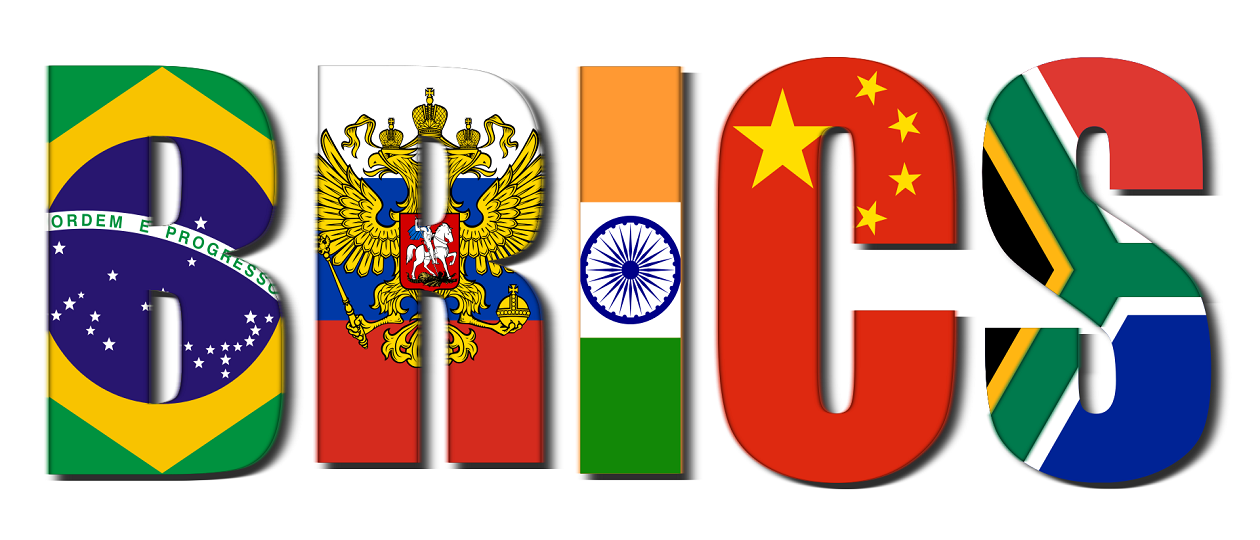
Many reflections have been published on the prospects of BRICS, an organization that is still perceived ambiguously in the world.
The founding organizers (2006) demonstrated that country-based associations of non-Western civilizations can exist in the world. Although this vessel is currently only a quarter filled with meaning, it exists. As a fact. As a factor that should eventually gain real significance.
It’s worth noting that the timing was apparently not accidental. The following year (2007) saw President Putin’s Munich speech, followed by (2008) the financial and economic crisis (in Khazin’s terminology, the PEC crisis: a decline in the efficiency of capital), which, for illiberal economists, marked the end of financial capitalism.
As is well known, all large systems have a high degree of inertia (Russia survived on the legacy of the USSR for over 30 years), and the exhausted model of financial capitalism still functions, albeit at great cost (issuing US dollars now generates inflation, not profit). But the “stop” is just around the corner, and then a collapse will follow, after which a new political and economic reality will take shape over the next few years, resulting in the emergence of new financial and economic models.
We use the plural because we hope that Russia will develop its own civilizational model, based on the ethics of non-Western cultural (spiritual) values, with a consequent anti-capitalist ideology.
Why, in our view, is there reason to believe that BRICS, 20 years after its inception, will soon begin to gain strength and significance in the world? In fact, one might even say it is already gaining momentum. An indirect sign is the desire of economically well-developed countries in the Global South and East, with significant territories and relatively large populations, to join the Organization of Non-Western Civilizations.
One of the main factors accelerating the process of political and economic integration among BRICS member states is the “liberation” of China to navigate independently. This means the de facto end of Deng Xiaoping’s largely brilliant (for its time) plan to intertwine the economies of China and the United States to the point of making it impossible (economically unfeasible) for the United States to engage in open conflict with China.
According to IEF experts, since 2017 (Trump’s first presidency), the share of Chinese imports to the United States has been rapidly replaced by goods from other countries, primarily Vietnam, Mexico, and Taiwan. In 2022, the share of Chinese imports fell to 16%, and by the end of 2024, to 13%. The Chinese share is estimated to be no more than 9% by the end of 2025.
And the collapse of financial markets (which will begin with this bubble) and, possibly, a sharp depreciation of the US dollar will significantly accelerate the development (we are confident that this process is already underway) of a BRICS system of mutual payments, including a single currency to facilitate international settlements. This will begin within a new political and economic community, which countries that are currently only just considering joining will actively join.
The foundation of BRICS’s meaning may initially lie not in a commitment to capitalism or anti-capitalism, but in a shared awareness of the existential importance of uniting non-Western civilizations to preserve specifically non-Western values, including spiritual values, both at the level of worldview and the basis for life. And an anti-capitalist model in one form or another—meaning the absence of Mammon worship, where “for money, yes”—will come automatically, provided there is morality and spirituality.
 Kirill Benediktov
 Robert Reich