

 Yuri Chekalin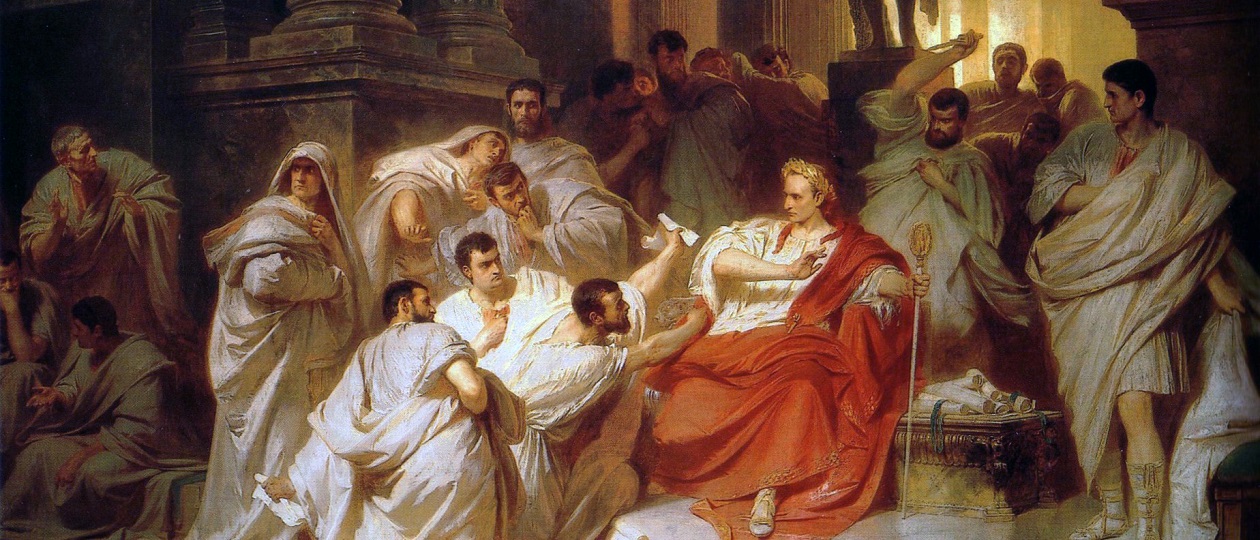
The concepts employed throughout this article are not presented as fixed or universally accepted definitions.
Concepts and Terminology: A Framework for Analysis
Terms such as myth, mass, power, charisma, and political religion have acquired different meanings across history, sociology, anthropology, political science, and philosophy.
Rather than attempting to resolve these longstanding conceptual debates, this article adopts a functional approach. It asks not only what these concepts mean, but what they accomplish within political life.
This methodological choice reflects a broader principle. Political ideas rarely exercise historical influence because of their conceptual precision alone. Their significance lies in their capacity to shape collective perception, organize social experience, legitimize authority, and motivate political action. Accordingly, the concepts examined in the following pages are understood less as abstract categories than as analytical instruments for interpreting historical processes.
The order in which these concepts are introduced is deliberate.
The discussion begins with modernity, the historical context within which twentieth-century mass politics emerged. It then turns to myth, understood not as the opposite of truth but as a symbolic structure through which communities interpret reality and assign meaning to political experience. From there, the analysis proceeds to the concept of the mass, the principal collective actor in Canetti’s political anthropology. Only after establishing these foundations does the article examine power, political religion, charisma, and ritual, each of which represents a distinct dimension of the relationship between political authority and collective imagination.
Throughout this section, no single theoretical tradition is treated as definitive. Canetti provides the principal conceptual framework for the analysis that follows, but his ideas are considered alongside those of Max Weber, Émile Durkheim, Ernst Cassirer, Hannah Arendt, Eric Voegelin, Emilio Gentile, and other scholars whose work has fundamentally shaped the modern study of political symbolism and authority. Their perspectives are not presented as mutually exclusive explanations but as complementary approaches that illuminate different dimensions of the same historical phenomena.
This approach reflects the central methodological assumption of the article: complex historical realities are seldom explained by a single theory. Political myth, mass mobilization, and symbolic power emerge through the interaction of institutions, ideas, emotions, historical circumstances, and human agency. The purpose of conceptual analysis is therefore not to simplify history but to provide a coherent framework through which its complexity can be more clearly understood.
Modernity
What does it mean to describe a society as modern? Although the term is widely employed across the historical and social sciences, its meaning has never been entirely settled. For nineteenth-century liberals, modernity often signified the gradual triumph of constitutional government, scientific inquiry, industrial development, and individual liberty. Classical sociologists emphasized different dimensions of the same transformation. Max Weber associated modernity with rationalization and bureaucratic administration; Émile Durkheim highlighted the increasing complexity of social organization; Karl Marx viewed it through the dynamics of industrial capitalism and class relations. Despite their differences, these thinkers shared an important assumption: modern society represented a decisive break with earlier forms of political and social organization.
Twentieth-century history complicated this assumption. The unprecedented expansion of science, technology, literacy, and administrative capacity did not produce a corresponding decline in political symbolism or collective myth. On the contrary, some of the most technologically advanced states simultaneously developed elaborate political rituals, charismatic cults of leadership, and narratives of national or revolutionary destiny. The expectation that modernization would inevitably lead to the progressive secularization and rationalization of political life proved far more problematic than many nineteenth-century observers had anticipated.
For this reason, the present article does not treat modernity as the opposite of myth. Rather, modernity is understood as a historical condition characterized by profound transformations in the organization of society, the exercise of political authority, and the production and circulation of knowledge. These transformations altered the social environment within which myths operated, but they did not eliminate the human need for symbolic narratives capable of providing collective identity, historical purpose, and political legitimacy.
Modernity, therefore, should not be understood simply as the triumph of reason over tradition.
It is more accurately conceived as a period in which rational institutions and symbolic politics developed simultaneously, often reinforcing rather than excluding one another. Bureaucratic administration required legitimacy; mass democracy required shared narratives; ideological movements required symbols capable of translating abstract doctrines into emotionally compelling forms. In this sense, modernization expanded not only the administrative capacities of the state but also its capacity to create, disseminate, and institutionalize political myths.
This interpretation does not imply that modern political myths are identical to those of antiquity or the medieval world. Their content, social functions, and historical contexts differ profoundly. Yet the persistence of symbolic forms within modern politics suggests that myth should be regarded not as the antithesis of modernity but as one of its enduring companions. It is precisely this relationship—between rational institutions and symbolic imagination—that provides the historical setting for the analysis developed throughout the remainder of this article.
Myth
If modernity is commonly associated with the advance of reason, why has political myth remained one of the most enduring features of modern public life? This question lies at the center of the present study. The persistence of myth within technologically advanced and administratively sophisticated societies challenges one of the most influential assumptions of nineteenth-century social thought: that modernization would progressively diminish the political significance of symbolic narratives, sacred histories, and charismatic authority.
Such an expectation has proven historically difficult to sustain. The twentieth century witnessed the proliferation of political myths across societies that differed profoundly in their institutions, ideologies, and cultural traditions. Narratives of national rebirth, revolutionary redemption, racial destiny, historical inevitability, and collective sacrifice became integral components of political movements that otherwise shared remarkably little in common. These myths did not merely accompany political programs; they helped to define political identities, legitimize authority, and organize collective action.
For the purposes of this article, myth is understood not as a synonym for falsehood or deliberate deception, but as a symbolic narrative through which communities interpret historical experience and assign meaning to political life. Myths simplify complexity, transform historical events into shared memory, and provide societies with a language through which collective aspirations, fears, and identities may be expressed. Whether historically accurate, partially accurate, or entirely fictional is not, in the first instance, the question that concerns the historian. The more fundamental question is why particular narratives become historically persuasive and politically effective.
This functional understanding of myth draws upon several intellectual traditions. Ernst Cassirer argued that myth represents one of the fundamental symbolic forms through which human beings experience reality. Émile Durkheim demonstrated that collective beliefs and rituals contribute to the formation of social solidarity, regardless of their empirical content. Roland Barthes showed how modern societies continue to generate myths through everyday political and cultural practices, while Emilio Gentile’s work on the sacralization of politics illustrates how modern states can invest secular ideologies with religious forms and symbolic authority. Although these scholars differ substantially in their theoretical assumptions, they converge in rejecting the notion that myth belongs exclusively to the ancient or pre-modern world.
Within this broader intellectual tradition, Elias Canetti occupies a distinctive position. Unlike Cassirer, who emphasized symbolic thought, or Durkheim, who focused upon the social functions of the sacred, Canetti approached myth through the dynamics of crowds and power. His concern was less with the origin of myths than with the manner in which symbolic structures become politically effective. For Canetti, myths acquire historical significance not simply because people believe them, but because they shape collective behavior, reinforce authority, and define the emotional relationship between rulers and the ruled.
This distinction is of particular importance for the present study. Political myths are not examined here as collections of beliefs to be verified or refuted. Rather, they are analyzed as historical forces. Their significance lies not primarily in their factual accuracy but in their capacity to influence political action. A myth that inspires millions to act possesses historical importance regardless of its empirical truth. Conversely, an empirically accurate statement may exercise little historical influence if it fails to resonate within the symbolic imagination of society.
Understanding myth in this manner also helps explain why modernization did not abolish symbolic politics. Industrialization, bureaucratic administration, mass education, literacy, cinema, radio, and later television did not diminish the social need for shared narratives. Instead, they transformed the scale and speed with which such narratives could be created, disseminated, and institutionalized. Modern political myths became inseparable from the technologies and administrative capacities of the modern state itself.
The argument advanced in this article therefore rests upon a simple but historically significant proposition: myth should not be regarded as the opposite of modern politics. It is one of the principal ways through which modern politics becomes meaningful to those who participate in it. Political institutions may govern societies through laws and administrative procedures, but they acquire legitimacy only when those institutions are embedded within narratives that explain who “the people” are, what historical mission they possess, and why political authority deserves recognition. In this sense, myth is not the residue of a pre-modern past. It remains one of the enduring foundations of political life in the modern age.
Mass
Among the concepts that structure Elias Canetti’s political thought, none is more fundamental than the crowd. It is no coincidence that Crowds and Power begins not with rulers, governments, or institutions, but with the crowd itself. For Canetti, political power cannot be understood without first examining the collective formations through which human beings experience solidarity, fear, equality, and action. Power is not merely exercised over crowds; it is shaped by their existence.
The concept of the crowd has occupied scholars since the late nineteenth century. Gustave Le Bon regarded crowds as psychologically unstable, emotionally suggestible, and prone to irrational behavior. Sigmund Freud, while accepting many of Le Bon’s observations, argued that collective behavior could only be understood through the psychological bonds that unite individuals around shared objects of identification. José Ortega y Gasset emphasized the emergence of the “mass man” as a defining characteristic of modern civilization, while Hannah Arendt examined the role of atomized masses in the development of totalitarian movements. Each approached the phenomenon from a different perspective, yet all recognized that modern politics could no longer be explained solely through the actions of isolated individuals.
Canetti’s contribution differs in both method and ambition. Rather than constructing a psychological theory of crowds or a sociological account of mass society, he sought to identify recurring anthropological patterns that transcend particular historical periods. Crowds, in his interpretation, are not accidental gatherings but one of the fundamental forms of human collective existence. They emerge under diverse historical conditions and assume many different configurations, yet they exhibit recurrent symbolic and emotional characteristics.
One of Canetti’s most original observations concerns the experience of equality within the crowd. Individuals who ordinarily occupy different social positions temporarily experience themselves as participants in a common collective existence. Differences of rank, profession, wealth, and status become less significant than membership in the crowd itself. This experience helps explain the extraordinary emotional intensity that collective gatherings often generate. Participation is not merely physical; it is existential. Individuals experience themselves as part of a larger social body whose perceived unity may temporarily transcend everyday divisions.
At the same time, Canetti rejects the reduction of crowds to irrationality. Although crowds are undoubtedly capable of destructive behavior, they are not inherently violent, nor are they necessarily manipulated by political leaders. Religious pilgrimages, national commemorations, revolutionary demonstrations, military mobilizations, mourning ceremonies, and public celebrations all produce forms of collective experience that differ substantially in purpose, organization, and emotional character. The historical question, therefore, is not whether crowds are rational or irrational, but under what conditions they become politically consequential.
This perspective marks an important departure from earlier crowd psychology. Whereas Le Bon often regarded the crowd primarily as a threat to civilization, Canetti treats it as a permanent feature of political and social life. Crowds neither belong exclusively to revolutionary movements nor disappear within constitutional democracies. They accompany elections, public commemorations, religious festivals, sporting events, and moments of national crisis. Their persistence suggests that collective political experience cannot be reduced to institutional analysis alone.
Modern historiography has both confirmed and challenged elements of Canetti’s interpretation. Research on nationalism, political ritual, mass communication, and collective memory demonstrates that large-scale political mobilization depends not only upon institutions and material interests but also upon shared symbols and emotionally meaningful narratives. At the same time, historians have emphasized that crowds do not arise spontaneously in a social vacuum. Their composition, organization, objectives, and behavior are shaped by historical circumstances, political institutions, economic conditions, and cultural traditions. Canetti’s anthropological perspective therefore requires historical specification if it is to illuminate particular political events.
For the purposes of this article, the concept of the crowd serves neither as a universal explanation of political history nor as an autonomous historical actor. Rather, it provides an analytical bridge between myth and power. Political myths require communities capable of sharing symbolic meanings; political authority requires audiences prepared to recognize legitimacy; collective rituals require participants whose identities are temporarily transformed through common experience. The crowd represents the social space within which these processes become historically visible.
Implications
If myth provides political communities with symbolic meaning, the crowd provides those meanings with collective embodiment. Myths become politically significant only when they are shared, enacted, and experienced by groups rather than isolated individuals. Understanding the crowd therefore brings the analysis one step closer to the central question of this article: how symbolic narratives become effective forms of political power within modern mass societies.
To be continued…
 Kirill Benediktov
 Robert Reich



One comment
Michael Yarvin
14.07.2026 at 21:39
Hi! Does your site have a contact page? I’m having a tough time locating it but, I’d like to send you an e-mail. I’ve got some suggestions for your blog you might be interested in hearing.
Either way, great site and I look forward to new posts.