

 Yuri Chekalin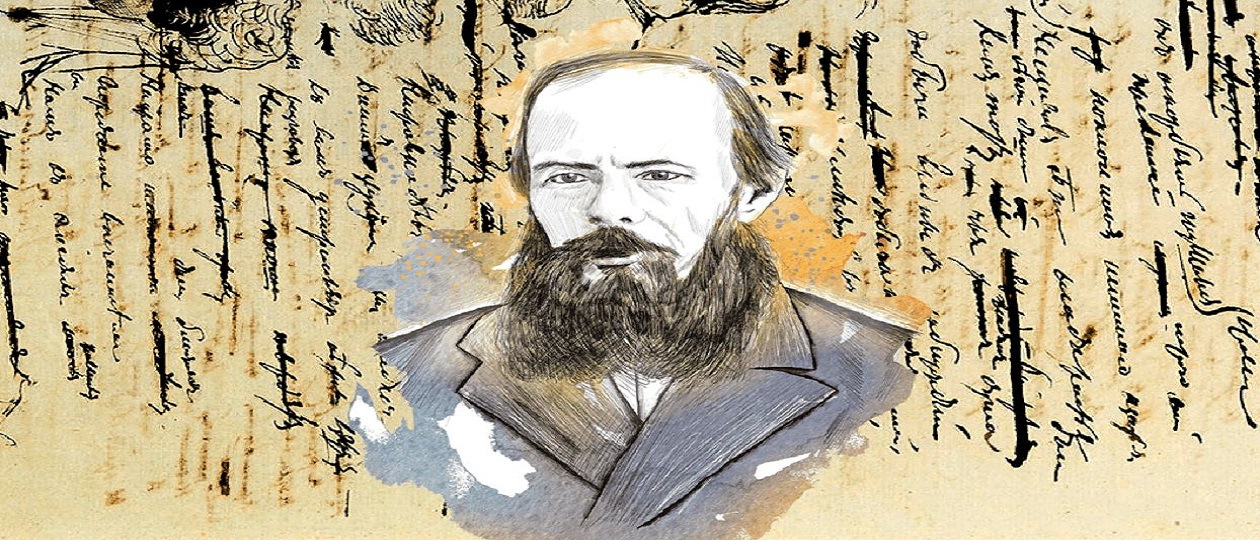
At a time of growing geopolitical tension, we, a group of authors of the international online journal “The CommentaTHOR,” express concern about the current state of cultural exchange, as well as the negative processes that are redefining the generally accepted values of literature and art in general.
It is clear that world culture represents a unified spiritual space, shaped by the creativity of peoples from different countries and eras. Attempts to exclude or displace individual cultural traditions from this space lead to the impoverishment of the common cultural heritage and the weakening of mutual understanding between peoples.
The work of great writers and thinkers belongs not only to their national culture, but to all of humanity. Just as world culture is unimaginable without Homer, Antoine de Saint-Exupéry, William Shakespeare, Johann Goethe, Jack London, Miguel de Cervantes, Franz Kafka, Thomas Mann, Yukio Mishima, Jaroslav Hašek, Ernest Hemingway, O. Henry, and Mark Twain, it is also unthinkable without the works of Leo Tolstoy, Boris Pasternak, Anton Chekhov, Maxim Gorky, Mikhail Sholokhov, Mikhail Bulgakov, and Fyodor Dostoevsky.
Preserving the integrity of world culture is an essential condition for cultural exchange, the foundation of dialogue between countries and peoples. In the face of contemporary global challenges, public initiatives can strengthen mutual understanding and support humanistic values.
In this regard, we propose an international cultural project—the “Days of Dostoevsky” festival in Japan, dedicated to the literary and philosophical legacy of Fyodor Mikhailovich Dostoevsky. The festival’s goal is to develop cultural dialogue and promote global literary heritage.
The festival is open to participation and welcomes initiatives and collaboration of any kind. The festival will feature lectures, discussions, photo exhibitions, theater and concert performances. We invite researchers, cultural figures, educational organizations, and all interested parties to participate.
The Dostoevsky Days Festival in Japan will be held from August 7 to 16, 2026, in Tokyo and Osaka.
This event aims to contribute to strengthening international dialogue and to remind everyone that world culture is the single and indivisible heritage of humanity.
 Natalia Tanshina
 Dmitri Drobnitsky
 Robert Reich




2 comments
Pingback: A Century of Russian Fever in the Japanese Psyche
Tatiana Kasatkina
28.03.2026 at 17:56
In troubled times, everyone is once again faced with questions that are gradually forgotten in times of peace and prosperity. Once again, seeing and feeling themselves in the face of death, a person begins to ask themselves why they are here, what their prospects are in this life and beyond—and how life on earth (both for a human and humanity) must be lived to realize these prospects. They cease to be lulled by the moment and turn to those who have entered eternity—at least in human memory. And more and more people around the world are turning to Dostoevsky for answers—despite any attempts at limitation.
Because Dostoevsky, more precisely and profoundly than anyone in European culture—and at the same time more unobtrusively, as if from the depths of every human heart—answered these universal human questions. He is a true space for connecting East and West. In light of what has been said, I think that a Dostoevsky festival in Japan, which could bring together his interpreters through the means of science and art and which would be addressed to his general readership, is a very timely and necessary idea.