 Vladimir Morozov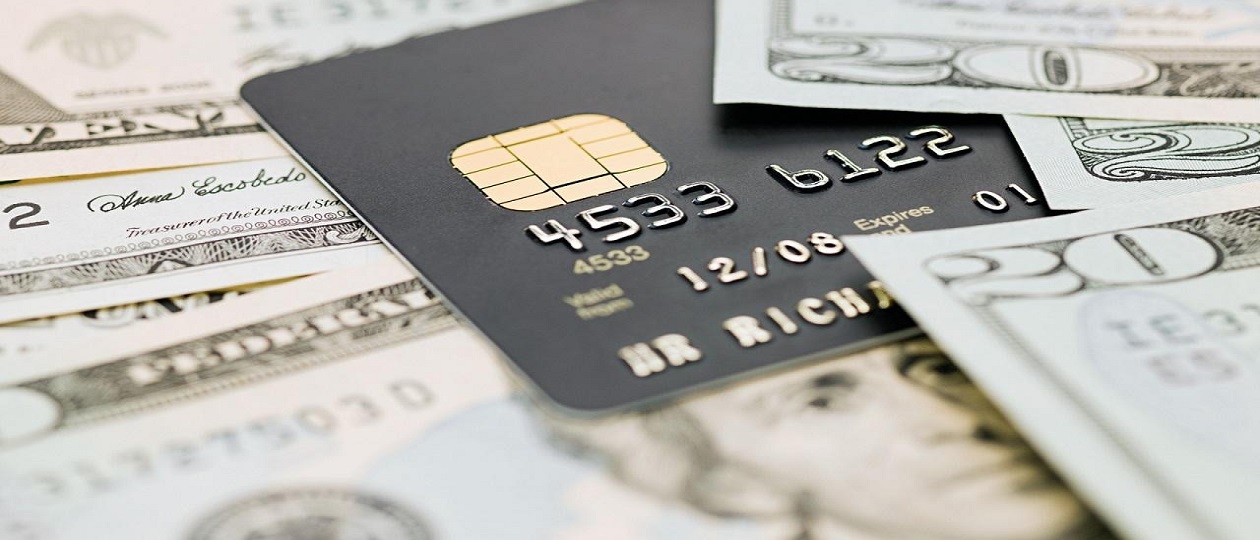
Modern financial capitalism is nothing less than a debt economy. And the main component of a debt economy, its “torque,” is credit money.
Credit money is qualitatively different from its predecessor, “commodity money,” which had a very specific intrinsic value (labor expended), and a specific commodity (cattle, hides, wheat, etc.) served as the so-called “universal equivalent.” Gold and silver, as the most valuable precious metals, emerged as the most widely used commodity money.
With the emergence of capitalism, moneylenders began introducing credit money, which had no intrinsic value (labor expended). Initially, this was paper credit notes pegged to something tangible, like gold or silver. Today, under financial capitalism—after the US dollar’s peg to gold was lifted in 1971—credit money has become non-cash, its issuance merely a digital record on electronic media in accounts. In other words, bankers’ counterfeiting has become completely legalized, and money can literally be created out of thin air. A bank issues a loan to a borrower at interest, consisting (under conditions of minimal reserves) of 90-95% newly “created” money, and after the loan is repaid, it closes (destroys) the electronic record, keeping the interest as real (real) money.
Why is there always demand for credit money, despite the fact that banks, in pursuit of superprofits, often impose conditions that allow businesses in the real sector to barely make ends meet, essentially forcing them to “work for the boss,” that is, for moneylenders? The fact is that the mechanism of credit money is based on guaranteed demand in a market economy. There’s never enough money for anyone: not for governments, not for companies, not for households. This means that all three main macroeconomic agents are constantly searching for money. The formula is simple. The amount of money in the economy (the money supply) is equal to the sum of all outstanding loans, and debtors can only pay with this money because there’s simply no other. And because loans bear interest, the sum of all debtors’ liabilities exceeds the money supply by exactly the amount of interest. It’s as simple as that—a money shortage is guaranteed, since there’s no other money in the market economy besides credit.
Clearly, this mechanism for bank profit-making is a pyramid scheme. And the worship of the “golden calf,” coupled with the greed of usurers, only accelerates the moment when the entire pyramid collapses. In previous years, the “money masters” would artificially “deflate the bubble” from time to time by orchestrating emergency situations (one of the most recent major ones was the 2001 simulated terrorist attack on the World Trade Center in New York City, which killed approximately 3,000 people), which provided the “grounds” for a partial collapse of financial markets followed by a subsequent recovery. Today, however, the financial bubble has become so large (tens of trillions of dollars of “air money” have been issued over the past 16 years) that it’s safe to say the next collapse will be real, literally.
Clearly, serious brainstorming is underway behind the scenes of the global economy today, seeking answers to the question: how to make the inevitable collapse manageable and what socioeconomic model of social life can replace the current one, which will be instantly swept away by the coming “flood.” Let’s hope that Russia will decide to abandon the root cause of such crises, which end in total collapse—the market-driven debt economy. Ultimately, it is in Russia that there is a positive alternative experience.
Credit money is qualitatively different from its predecessor, “commodity money,” which had a very specific intrinsic value (labor expended), and a specific commodity (cattle, hides, wheat, etc.) served as the so-called “universal equivalent.” Gold and silver, as the most valuable precious metals, emerged as the most widely used commodity money.
With the emergence of capitalism, moneylenders began introducing credit money, which had no intrinsic value (labor expended). Initially, this was paper credit notes pegged to something tangible, like gold or silver. Today, under financial capitalism—after the US dollar’s peg to gold was lifted in 1971—credit money has become non-cash, its issuance merely a digital record on electronic media in accounts. In other words, bankers’ counterfeiting has become completely legalized, and money can literally be created out of thin air. A bank issues a loan to a borrower at interest, consisting (under conditions of minimal reserves) of 90-95% newly “created” money, and after the loan is repaid, it closes (destroys) the electronic record, keeping the interest as real (real) money.
Why is there always demand for credit money, despite the fact that banks, in pursuit of superprofits, often impose conditions that allow businesses in the real sector to barely make ends meet, essentially forcing them to “work for the boss,” that is, for moneylenders? The fact is that the mechanism of credit money is based on guaranteed demand in a market economy. There’s never enough money for anyone: not for governments, not for companies, not for households. This means that all three main macroeconomic agents are constantly searching for money. The formula is simple. The amount of money in the economy (the money supply) is equal to the sum of all outstanding loans, and debtors can only pay with this money because there’s simply no other. And because loans bear interest, the sum of all debtors’ liabilities exceeds the money supply by exactly the amount of interest. It’s as simple as that—a money shortage is guaranteed, since there’s no other money in the market economy besides credit.
Clearly, this mechanism for bank profit-making is a pyramid scheme. And the worship of the “golden calf,” coupled with the greed of usurers, only accelerates the moment when the entire pyramid collapses. In previous years, the “money masters” would artificially “deflate the bubble” from time to time by orchestrating emergency situations (one of the most recent major ones was the 2001 simulated terrorist attack on the World Trade Center in New York City, which killed approximately 3,000 people), which provided the “grounds” for a partial collapse of financial markets followed by a subsequent recovery. Today, however, the financial bubble has become so large (tens of trillions of dollars of “air money” have been issued over the past 16 years) that it’s safe to say the next collapse will be real, literally.
Clearly, serious brainstorming is underway behind the scenes of the global economy today, seeking answers to the question: how to make the inevitable collapse manageable and what socioeconomic model of social life can replace the current one, which will be instantly swept away by the coming “flood.” Let’s hope that Russia will decide to abandon the root cause of such crises, which end in total collapse—the market-driven debt economy. Ultimately, it is in Russia that there is a positive alternative experience.
 Dmitri Drobnitsky
 Alexander Rimov
 Sergey Stankevich