 Dmitri Drobnitsky
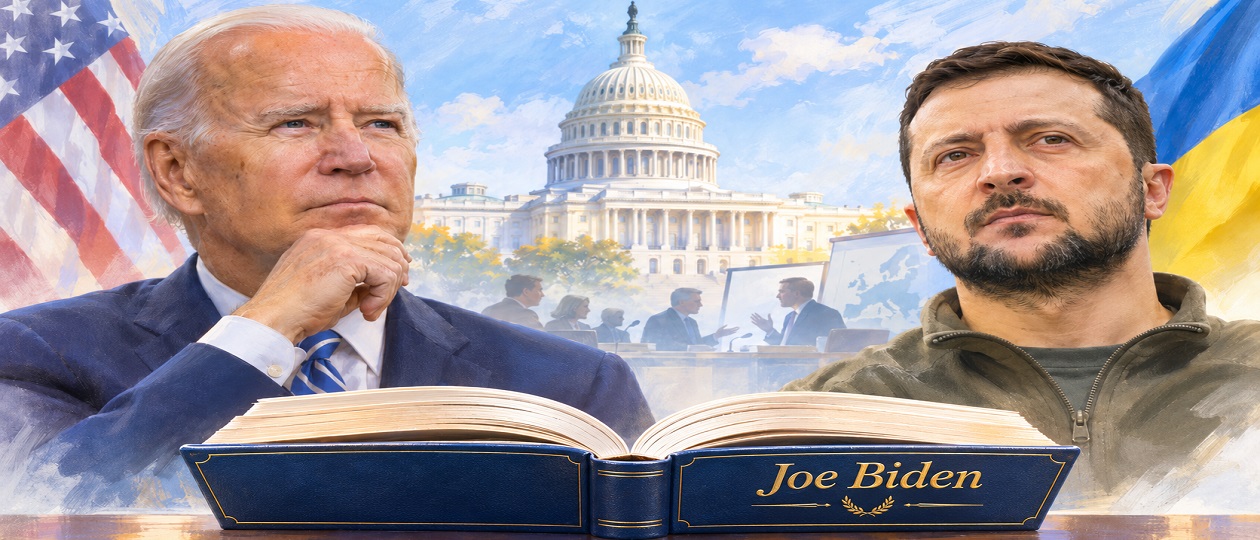
Joe Biden’s new memoir, Promise Me, America, would make for rather dull reading — including his reflections on Trump and Trumpism — were it not for the section devoted to his relationship with Volodymyr Zelensky.
Biden describes the leader of the Kyiv regime as difficult to work with, “moody and stubborn” and “not as grateful as I would have expected.” According to former NATO Secretary General Jens Stoltenberg, Biden also privately referred to Zelensky as “a pain in the ass.”
On the one hand, one might be inclined to chalk it up to old age. On the other, these remarks provide a legitimate starting point for a debate about Ukraine, Zelensky, and the provision of military and other forms of assistance to Kyiv.
The Democratic old guard in Congress is actively lobbying for the restoration of full-scale aid to Ukraine and concentration of America’s remaining resources on the so-called eastern flank of NATO.
Yet this does not mean that the Democratic Party as a whole is united on the Ukraine project. Barack Obama has yet to say a word about its continuation under the new circumstances. Nor has Georgia Senator Jon Ossoff, currently one of the Democratic front-runners for the 2028 presidential nomination.
Putin, of course, remains the “bad guy” and a “dictator” in the eyes of this crowd, while Russia, like China, is a “revisionist power” — practically Mordor itself. But whether to continue waging hybrid warfare against Russia with the same intensity is a question that has yet to be debated.
A Democratic president’s memoir is not merely a personal account; it is a political product of the party. The unflattering descriptions of Zelensky are therefore no accident. They are an invitation to debate one of the most consequential foreign policy issues facing the United States two years ahead of the presidential election.
 Yuri Chekalin