 Alexander Rimov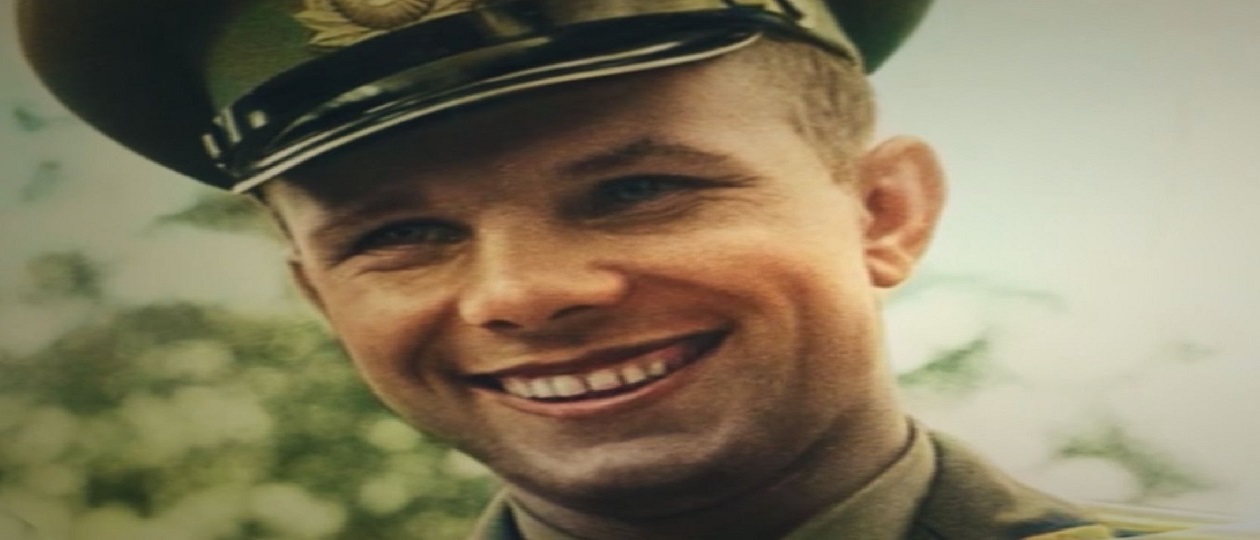
“He said, ‘Let’s go!‘ and waved his hand, as if he were flying down Piterskaya Street, he was flying over the Earth.”
On April 12, 1961, the world stood still, but exactly 65 years later, we look at this date differently. Not only as a triumph of technology, but also as a parable about a man who rose above the system.
On these bright Easter days, when the sky is especially close to the earth, I want to talk not about the “cogs” of the Soviet system, but about the living Yuri Gagarin. About a man who became a symbol not just of a window dressing, but of that very cultural code where science does not war with faith, and where true patriotism is not an obedient “yes!”, but a moral act.
A Hero of the “Brass Pipes”: Between Fame and Conscience
Gagarin returned from space a worldwide favorite, but museum chronicles remind us that his greatest challenge was not the G-forces of orbit, but the “brass pipes” of fame. The authorities tried to turn a simple Smolensk boy into a propaganda icon. Newspapers circulated “revelations” that the cosmonaut “flew and didn’t see God.”
But Yuri Gagarin himself, raised in the traditions of the Smolensk region, where church holidays were honored even in difficult times, was far more complex and profound than official slogans. Legend, told by cosmonaut Leonov, has it that on April 14, 1961, during a reception in the Kremlin, Nikita Sergeyevich Khrushchev, after the third or fourth toast, cautiously asked Gagarin, “Yura, have you seen God?” He jokingly replied, “I have.” Khrushchev replied, “Please, don’t tell anyone about this.” A short time later, the Patriarch approached Gagarin and asked the same question. No longer comfortable with the joke, he replied, “No, unfortunately, Father, I haven’t.” The Patriarch replied, “Please, Yura, don’t tell anyone about this.”
Moreover, in Yuri Gagarin’s 1961 book, “The Road to Space: Notes of a USSR Pilot-Cosmonaut,” he states: “Many people came to our house: schoolchildren with teachers, collective farmers, even a group of frail old ladies. They wanted to know if I had seen God in the heavens. I was forced to disappoint them. Manned space flight dealt a crushing blow to the churchmen. In the flood of letters that poured in, I read with satisfaction confessions in which believers, impressed by the achievements of science, renounced God, agreeing that God does not exist and that everything associated with his name is fiction and nonsense.”
“Where is this beauty?”: A visit that challenged the system
Few people know, but it was a visit to the Trinity Lavra of St. Sergius in 1964 that sparked the brave act. In the Church Archaeology Department at the Moscow Theological Academy, Gagarin saw a unique model of the Cathedral of Christ the Savior, created in 1913 for the 300th anniversary of the Romanov dynasty.
According to the recollections of his friend, Air Force Colonel Valentin Petrov, Gagarin gazed at the details of the model for a long time, mesmerized, and then exclaimed, “Where is this beauty?” When the abbot replied that the “Moscow” swimming pool now lapped the site of the memorial church.
Destruction of the current situation: “It’s barbarism”
A year later, in December 1965, Gagarin took the podium at the VIII Plenum of the Komsomol Central Committee, dedicated to the patriotic education of youth. The audience expected to hear the usual hero’s report. But after the official part, Yuri Gagarin, looking the presidium in the eye, added something that hadn’t been written in the speeches handed down from above.
He publicly, from the podium, called the destruction of the cathedral “a barbaric attitude toward the memory of the past.” Here are his exact words, recorded in a transcript preserved in the archives (an audio recording of this speech has also been preserved): “In Moscow, the Triumphal Arch of 1812 was removed and not restored; the Cathedral of Christ the Savior, built with funds raised throughout the country in honor of the victory over Napoleon, was destroyed. Has the name of this monument really overshadowed its patriotic essence? I could go on and on with the list of victims of the barbaric attitude toward the monuments of the past.”
This speech was published in a collection of speeches from the plenum (in March 1966, in the collection “True to the Feat of the Fathers. Materials of the VIII Plenum of the Central Committee of the Komsomol”), and in 1968, in the book by Yuri Gagarin “There is a Flame!”, which collected all of Gagarin’s speeches.
The effect was like a bomb exploding. The terrified presidium immediately reported “upstairs” that cosmonaut No. 1 was spreading sedition. He directly accused the ideological machine of crippling the very idea of patriotism, tearing it out of its roots. This was an act that required no less courage than the flight itself.
True patriotism is opposition to thoughtlessness
Why do we speak of Gagarin today as an “opponent of the government”? It wasn’t because he was a dissident. His opposition was quiet and stubborn. He defended not the political system, but the Fatherland—with its history, pain, and beauty. Incidentally, Yuri Gagarin’s colleague, cosmonaut Alexei Leonov, rightly pointed out: “There’s no point in exaggerating and saying, for example, that Gagarin practically demanded the restoration of the destroyed Christ the Savior Cathedral. This is a real document, and it shows that Gagarin did not call for the restoration of the Christ the Savior Cathedral.”
Brezhnev’s reaction to the denunciation of Gagarin’s “sedition” was unexpected: “Why are you attacking Gagarin? He’s Russian, he made a suggestion. Explain to the Komsomol that we don’t have money for a church, but we’ll build a Triumphal Arch. Greetings to Yuri Gagarin.”
What consequences did this speech have? As it turns out, the decision to restore the 1812 Triumphal Arch was made by the Soviet government on December 10 of that year, more than two weeks before Gagarin’s aforementioned speech. Coincidence, or perhaps the first cosmonaut had been pushing this idea through other authorities before his speech? Incidentally, the arch wasn’t destroyed; it had been carefully dismantled, measured and photographed from all sides, with plans to reinstall it. But this wasn’t done, as Gagarin recalled. Now, its restoration has begun in earnest… Alas, Gagarin didn’t live to see the unveiling of the restored arch, which took place in December 1968 (and he himself, as we know, died in March of that year). But he did witness the beginning of its restoration.
He combined something incompatible in officialdom: the courage of a test pilot and an almost peasant-like humility before eternity. He understood that the technological breakthrough that gave humanity space does not negate moral compass. Quite the contrary, it demands it more urgently than ever.
Remember that untied shoelace on the red carpet at Vnukovo? The whole world watched that toe-lift, praying that Yuri wouldn’t trip. That’s the whole point: he was rising to power, but in this touching human vulnerability, he was stronger and superior to any general secretary, tsar, or president.
He was a patriot not of the party nomenklatura, but of the Earth and its people. A patriot who looked at the planet from a distance and saw how small and fragile it was. And in the year of the 65th anniversary of his heroic deed, at Easter, we understand: Gagarin is a reminder that any rockets and progress are meaningful only when they serve life.
Christ is Risen! And may each of us have the courage to say our “Let’s go!” toward goodness and truth.
 Yuri Chekalin
 Vitaly Golovkov