 Natalia Tanshina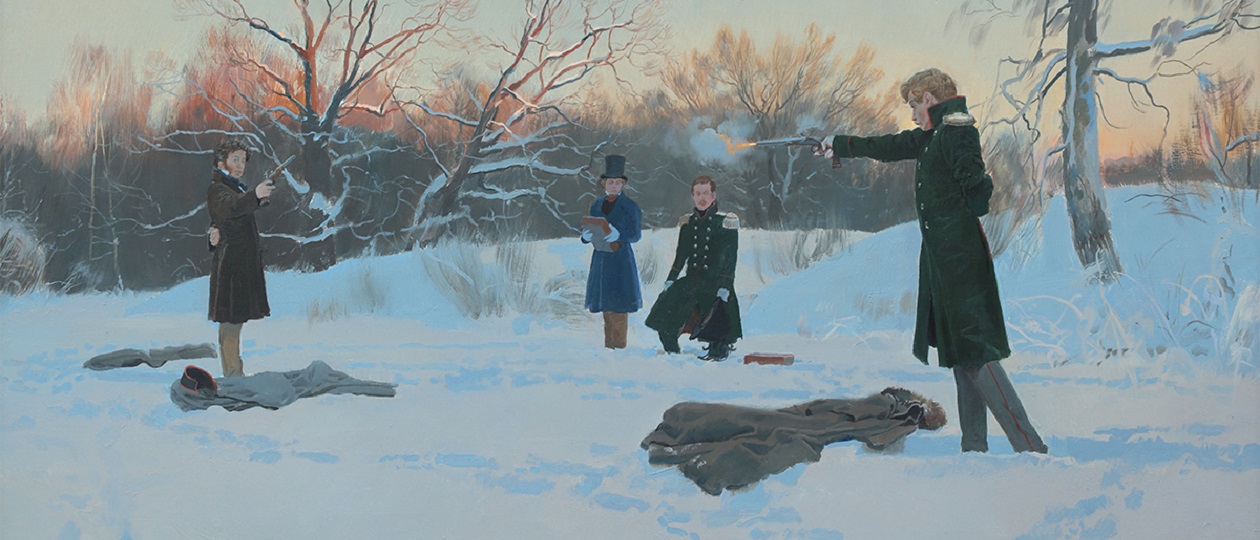
Or the question of whether the historian’s main virtue is skepticism?!
I’ve written many times about Count Nesselrode and the caricatural image he left in history. And all based on the testimonies of contemporaries. They always spoke the truth and were extremely objective, of course. Who would doubt them?!
It wasn’t just the chancellor who was targeted, but also his wife, Maria Dmitrievna. Among other things, she was accused of plotting the intrigue that led to Pushkin’s duel with Dantes. In other words, she and her husband were accused of nothing less than murdering the poet.
This version was developed by the famous Soviet Pushkin scholar P.E. Shcheglov in his book “Pushkin’s Duel and Death”, noting that Maria Dmitrievna “gossiped with Gekkeren about Pushkin’s family affairs and was a confidante of Dantes’s secret love affairs”, and after the duel, “Countess Nesselrode stood by Gekkeren’s side during the military-court proceedings, right up to the departure of the Gekkeren family”. Moreover, Shcheglov wrote that in 1927, Soviet researcher V. Goltsov, based on the notes of a certain Prince A.M. Golitsyn written in the 20th century, concluded that the author of the anonymous letter was Countess Nesselrode (he himself held a different version, which we’ll discuss later).
On what does Shcheglov base his “evidence”? On information drawn from Prince P.V. Dolgorukov’s work “Petersburg Sketches”.
The prince wrote: “… the chancellor’s wife, a woman of limited intelligence, unloved and unrespected by anyone, a bribe-taker, a gossip, and a real witch, but distinguished by extraordinary energy, audacity, and impudence, and by this audacity and impudence she kept the Petersburg courtiers in silent and submissive respect…”
Interestingly, Shcheglov collected various memoir accounts of Countess Nesselrode and, comparing the characterization given to her by Dolgorukov with other opinions, concluded: “Dolgorukov’s harsh remarks can be believed, because in the end, the main features of the countess’s character are depicted in the same way in the accounts of her admirers” (though “admirers”, and simply reasonable people, understandably did not portray her as a “witch”).
Shcheglov cites positive testimonies of contemporaries about Maria Dmitrievna, in particular, Alfred Fall, Baron M.A. Korff, and Prince P.P. Vyazemsky, but calls these characterizations “flattering” and “marked by the same hyperbole”, and trusts Dolgorukov unconditionally as a man who was well acquainted with high society and the court.
But who was this Prince Dolgorukov and should he be trusted?
Judge for yourself: this “republican prince”, as he was called, was offended by everyone and everything in Russia, including Emperor Nicholas I and his entourage. A man of brilliant intellect, he had a repugnant character, and contemporaries considered him capable of all kinds of nastiness. He published various kinds of nastiness about our country: for example, in 1842, he published a pamphlet about Russia in Paris, after which he was exiled and disgraced. Later, under Alexander II, not having received a ministerial post, he emigrated to Europe, again published a work in Paris titled “The Truth About Russia”, and was sentenced by the Senate to the loss of his princely title, his rights to his estate, and eternal exile.
And now to the question of who was the author of the anonymous letter that ruined Pushkin?
Shcheglov, based on handwriting analysis, argued that the author was Prince Dolgorukov himself (but based on Dolgorukov’s own testimony, Shcheglov forms the view that Nesselrode was guilty!). Suspicion fell on Prince I.S. Gagarin, although these versions were not subsequently confirmed. There is also another, completely unconventional, but interesting version: the author of the pamphlet was Pushkin himself!
It turns out that among Pushkin scholars there are many versions, they are still arguing, but in the mass consciousness it has become firmly established: Pushkin was killed by Nesselrode.
And then how do you go about trying to wash yourself clean before your descendants?
 Dmitri Drobnitsky
 Yaroslav Listov
 Yuri Chekalin