 Kamil Askerkhanov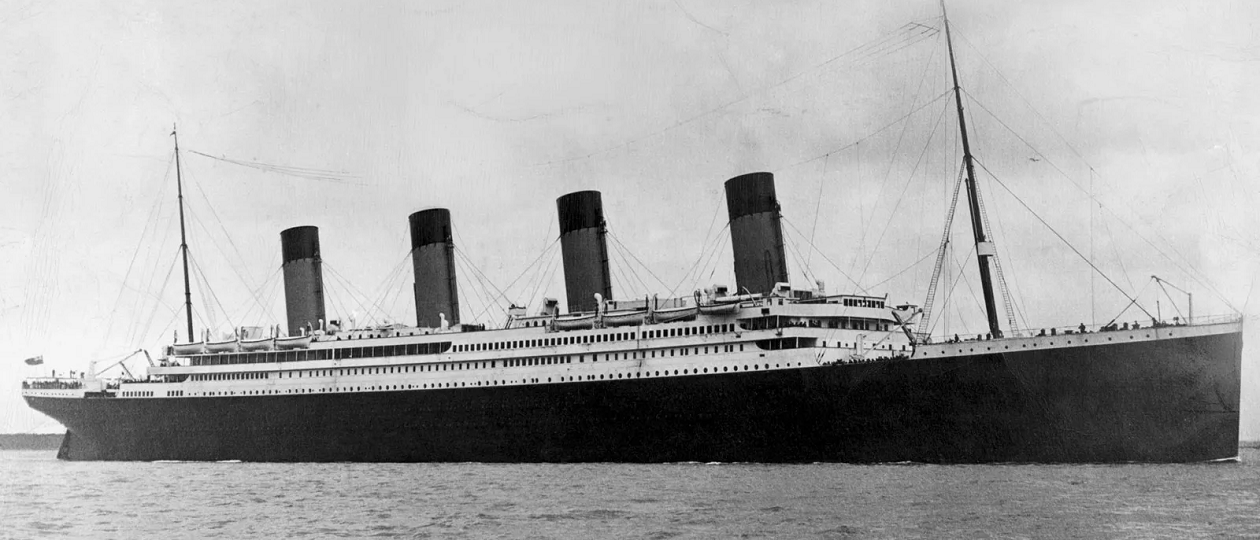
The global economy increasingly resembles the final hours of the “Titanic.” Not the moment of impact—that has already occurred—but rather the stage where the hull still holds, the lights are on, the orchestra is playing, and most passengers refuse to fully acknowledge the scale of what is happening.
Markets continue to tremble, inflation erodes the basic contours of consumption, and industry is winding down—not all at once, but as if “by plan,” with cold managerial logic. This is not panic; it is already the phase of flooding compartments. First, the water fills the lower decks—production, logistics, real incomes. The upper levels—finance, speculative capital—still hold, creating an illusion of controllability.
As on the “Titanic,” a clear social stratification of behavior emerges.
Some continue to “drink champagne”—inflating bubbles in the markets, spinning quick deals, extracting profit from volatility, fully aware that these are the last fat minutes. Others are engaged in more primitive, yet no less indicative activity—effectively “stripping the first-class cabins,” redistributing residual liquidity and assets through crisis mechanisms.
And, as with almost any catastrophe, there is the obligatory search for a convenient scapegoat. In the current configuration, this role has been assigned to the “iceberg named the Trump-Netanyahu tandem.” A convenient, media-friendly image onto which systemic failures can be blamed: trade wars, protectionism, political turbulence. The problem is that the iceberg is merely a trigger, not the cause. The ship was traveling at full speed in an ice zone long before the collision.
The key is not the impact itself, but the construction of the system that made it inevitable.
Overloaded debt, a hypertrophied financial sector, dependence on cheap money, and broken supply chains. All of this formed that very “unsinkable” hull, which in reality turned out to be a set of compromises and temporary fixes.
Now we are witnessing not a crisis as an event, but a crisis as a process.
Slow, multi-level, with different speeds for different groups. And, as in any such story, the main question is not whether it will sink—that is already decided. The question is who will make it into the lifeboats, and who will listen to the orchestra until the very end, convincing themselves that the music is still playing.
 Robert Reich
 Dmitri Drobnitsky