 Vitaly Golovkov
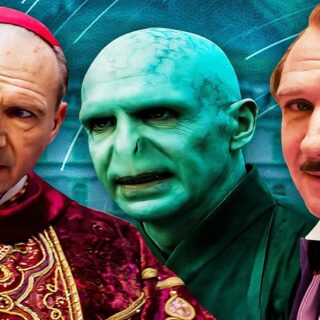
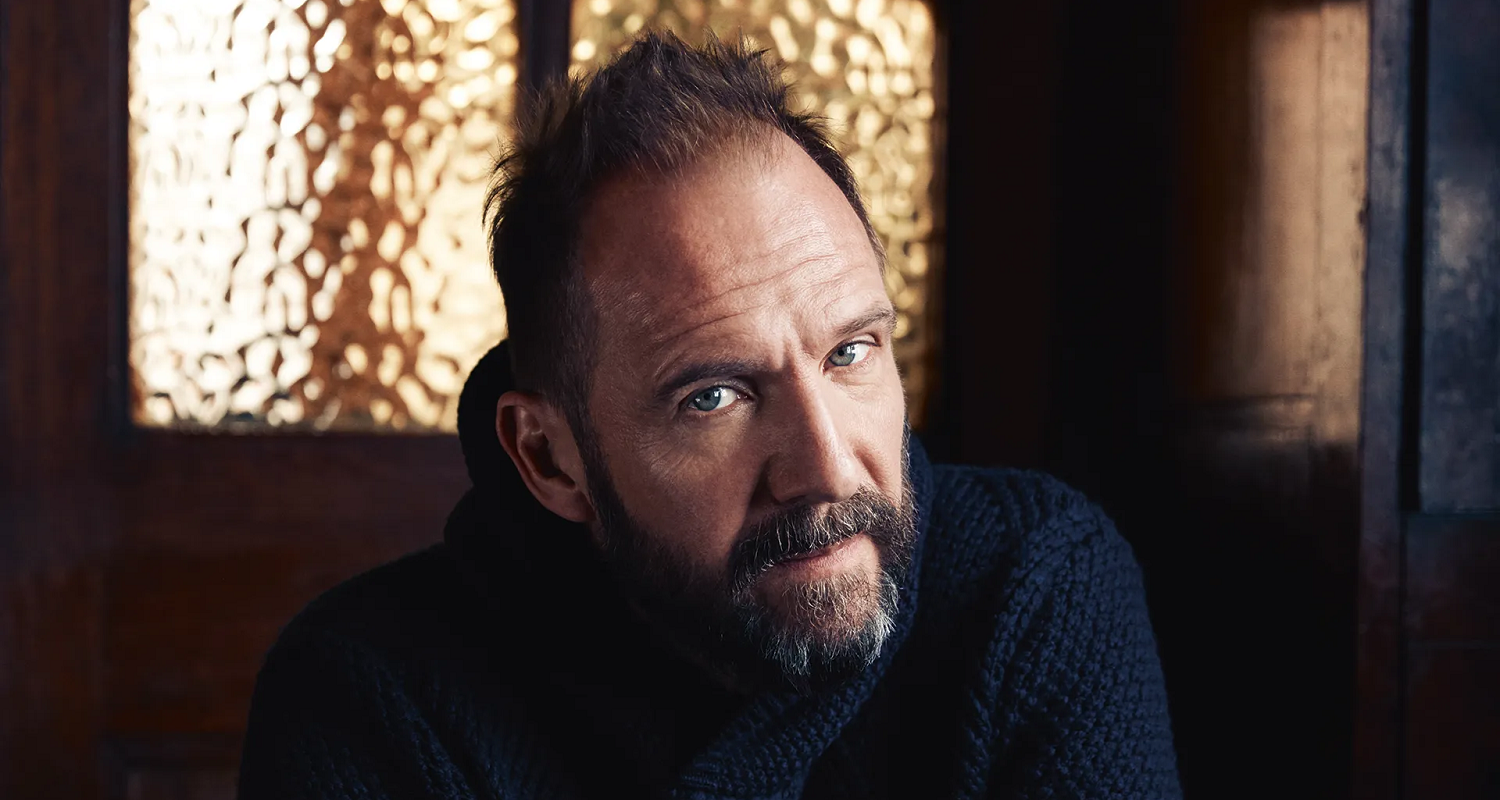
Ralph Fiennes always follows his own rules. Looking at his performance — whether in the Lord’s robes or in a haute couture suit, the viewer inevitably catches a cognitive dissonance.
We expect a monster, but we get an abyss of charisma, the “gold standard” of cinematic noir, which is impossible (and, honestly, one does not want) to update.
If you consider Ralph Fiennes just “that guy from Schindler’s List” or the “man without a nose” from “Harry Potter,” you have missed the most interesting part. This is pure, concentrated rock and roll, hidden behind a perfectly tailored suit. It is time to figure out what the secret of this phenomenon is and why “He-Who-Must-Not-Be-Named” performed by Fiennes actually is not a villain. We are used to calling it antagonism, but Ralph offered us something else: the aesthetics of decay, aristocratic loneliness, and an intellect that frightens more than any spell.
We dive into the world of the most “dangerous” actor of modernity, a study of the phenomenon of Fiennes himself — his magnetism, aristocratism, and why he is always “more” than just a villain role.
Architecture of silence and the Shakespearian code
The actor’s father, Mark Fiennes, was not just a famous photographer and experienced farmer — he restored dilapidated houses, because of which the family moved 15 times. The father restored them with his own hands and Ralph from childhood saw how something new and harmonious is erected from an unsightly set of walls.
Few people know, but Ralph Fiennes could have very well succeeded as a prominent architect. But, perhaps, precisely that year of studying the basics of design and architecture at Chelsea college of art and design in London endowed him with a special sense of structure, the ability to project a character’s personality, turning the most basic material into an aesthetic form.
But the true blueprint of his mastery was drawn at the beginning of his acting career on the great stages. The Shakespearian background became for Fiennes a real DNA of genius. His work on images in “Hamlet” (for which he received a “Tony” award), “Ivanov”, and “Uncle Vanya” enriched his subsequent creative path with that very “architecture of silence.” This is not just acting, it is a virtuoso surgery of meanings, where a storm is hidden behind absolute statics. And when we see his film “The Reader,” where he remains silent almost all the time, we see the school of Shakespeare — the ability to hold a pause that sounds louder than any scream, canonizing the manner of “freezing.”
Evolution of magnetism: from Amon Göth to “The Menu”
The absolute merit of Mr. Fiennes lies not so much in involvement in many box-office hits, but in the ability to humanize the transcendental. He made a contribution to the “ecology of human emotions” — the way he teaches the viewer to see dignity where it seems lost, and to find beauty in the most painful truth. He returned to cinematography the concept of tragic guilt.
Where another actor would have applied the paint of demonism or pathos, Fiennes uses a scalpel.
Remember his Amon Göth in the films “Schindler’s List” or Francis Dolarhyde in “Red Dragon.” These are not stereotypical monsters. These are deeply unhappy, crippled consciousnesses, locked in a cage of their own dogmas or traumas.
What especially distinguishes his works
Fiennes approaches a character not as a judge, but as a researcher seeking the point of human transformation, without condemnation. He shows the viewer not the result, but the process, the internal agony.
Through the aesthetics of minimalism he is capable of transmitting a storm of emotions in absolute statics, trusting the viewer’s intellect.
Alas, the seed of talent — Fiennes performs the most difficult ethical maneuver and takes upon himself the courage to transmit darkness without becoming a part of it, expanding our empathy.
Look at his choice of roles. He is not afraid to go where it is difficult, painful, scary or tragicomic.
His Amon Göth (“Schindler’s List”) — is a bored, capricious and infinitely dangerous psychopath, whose internal agony frightens more than the violence itself. If Fiennes knew how to play only tragedy, he would not be great. In Wes Anderson’s film “The Grand Budapest Hotel” his Monsieur Gustave is a perfume-man, who manages to maintain impeccable manners in the midst of chaos. Fiennes works at extreme speeds: delivering a “machine-gun burst” of jokes, monologues and comical primness. And this is not only the script — the actor’s sense of humor is brilliantly developed. And the recent “The Menu” without the image created by Fiennes would have turned from a deep existential satirical drama into an ordinary “slasher about rich people.”
“Conclave” (2024). Power in a half-whisper
In the picture “Conclave” Fiennes again proved that he is the king of nuance. The role of Cardinal Lawrence is a triumph of his theatrical mastery: minimum of movement with maximum of internal tension. This is a master class in how to hold the attention of the entire hall without raising the voice, and to transmit the greatness of power through doubt and humility.
This is a work for which he deservedly received another “Oscar” nomination, demonstrating how power can be played.
“F**k it all to hell”: The charm of self-irony
If you thought that Ralph Fiennes only knows how to look tragically into the distance, rewatch “In Bruges.” His Harry is the quintessence of rage, which is so absurd that it becomes hilariously funny. He plays a psychopath with a code of honor as if he is in a nursery group where his favorite shovel was taken away.
However, behind this grotesque shell hides something more: Fiennes filigree-writes for his hero a sincere desire to protect his family, which distinguishes the character against the background of ordinary movie villains. He again performs his signature maneuver, showing that even in a state of absolute madness his hero remains a human with his own principles and attachments. This performance once again confirms that Fiennes is capable of breathing life and dignity into any, even the most eccentric image.
Prepare the sedatives. The world of “Harry Potter” fans is officially feverish: HBO is picking “new blood” for its multi-year saga.
And while fans wonder if Cillian Murphy will try on the absence of a nose and the thirst for power, in the shadow of this fuss remains the figure who turned pure, quintessential evil into high art. It is obvious that the casting directors of the new saga will have to jump above their heads so that Voldemort is just as good, recognizable and accepted by the viewer.
A special connection with the “Russian soul”
A separate place in his work is occupied by an almost tangible connection with Russian classics. His fascination with Chekhov and Turgenev is not just a professional interest, but a real creative search. In the picture “Two Women” he accomplished the impossible: not only embodied the image of the melancholic Mikhail Rakitin, but learned the Russian language. There is no place for special effects here — only half-tones, that very “mysterious Russian soul” which the British actor managed to convey. It seems Ivan Turgenev himself, seeing such a hundred percent hit in the character type, would without hesitation approve Fiennes for this role and warmly endorse his vision of that very author’s truth.
Fiennes in his acting works returns to the profession its former weight and dignity. The fact that Ralph Fiennes does not have an “Oscar” exposes a deep gap in the understanding of the relevance and value of art.
While modern film academies often focus on the fashionable agenda of the day and social trends, Fiennes’ works represent an objective and deep artistic value.
His films and characters are classic works that do not flirt with modernity, therefore it is difficult to evaluate them within the framework of the simplified standards of our time. The scale of Fiennes’ talent has inscribed his characters — from refined aesthetes to great madmen — into the genetic code of world cinema.
 Yuri Chekalin
 Robert Reich
 Klim Zhukov