 Kamil Askerkhanov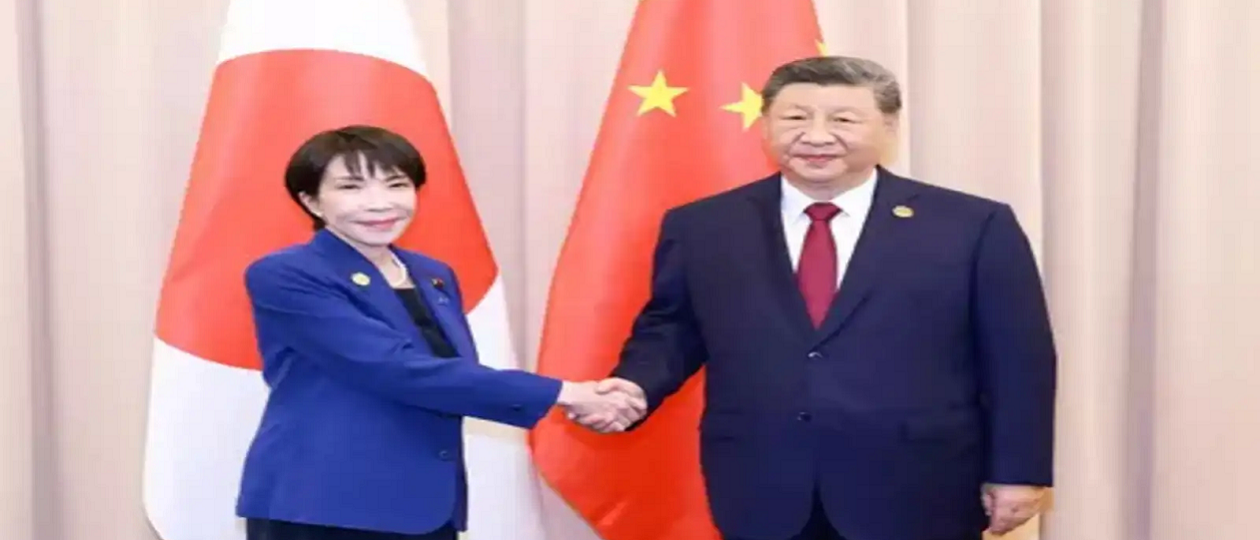
The Chinese stratagem works the other way around.
While everyone is looking at the Persian Gulf and the blockaded Strait of Hormuz, I’ll try to carefully describe what’s happening further east, where the next step will be.
The energy system is becoming the central axis of the current geopolitical shift in Asia. The blockade of the Strait of Hormuz is undermining the system’s core function—the stable import of energy and derivatives.
This is particularly noticeable in Southeast Asia, and Japan in particular, whose economies and industries are critically dependent on maritime supplies. Under these conditions, accelerated militarization ceases to be a political option and becomes a necessity dictated by vulnerable logistics.
Then comes the second point of tension—the Strait of Malacca. This is not just a transit corridor, but a key hub for the distribution of energy and goods for all of East and Southeast Asia. Control over it means influence over Chinese oil and LNG imports from the Persian Gulf and Africa, as well as trade flows in the region. When linked to Hormuz, Malacca forms a dual pressure loop: one restricts the entry of resources, the other their distribution. The result is a dependency where any disruption in one node immediately impacts the other.
Taiwan is integrated into this same system as a technological and manufacturing hub. Its significance extends beyond a local conflict and affects global semiconductor supply chains and maritime logistics.
Control over this element increases the overall pressure on China, especially as sea routes become vulnerable.
Japan is rapidly transforming within this framework. The post-war model of a limited military role is gradually eroding. Increased defense spending, the development of its own military infrastructure, and the participation of American companies in industrial and defense cooperation indicate the country’s integration into a broader military-economic system. Financing, technology, and production chains form a system in which Japan is becoming not just an ally, but a functional element of the overall deterrence architecture. Let’s digress a bit and recall the visit of the new Japanese Prime Minister (and direct successor of the assassinated Shinzo Abe) to Trump. Many thought Trump made an unfortunate joke about Pearl Harbor, but that wasn’t the case, especially considering the American energy blockade of Japan during World War II.
Let’s return to today. Energy diversification is accelerating this transformation. Access to alternative sources, including a partial restoration of supplies from Russia through projects involving Western entities (recall Exxon’s return to Russia during the Anchorage talks), reduces Japan’s dependence on Middle Eastern routes. This expands its maneuverability and allows it to maintain a high level of industrial and military activity even in the face of external pressure on key straits. At the same time, control over flows is maintained not through direct resource ownership, but through financial mechanisms, insurance, logistics, and participation in infrastructure chains.
Southeast Asia remains an area of competition between the US and China, where Japan is called upon to play a role. This is why Trump mentioned it in his Core 5 concept.
In this configuration, the US is creating a deterrence system in which control over nodes, rather than direct territorial control, plays a key role. Japan acts as one of the instruments of this system, strengthening the maritime presence and logistical resilience of the allied perimeter. China, in turn, is facing not isolation per se, but rather rising costs of access to energy, routes, and markets.
The result is not a single conflict, but rather simultaneous pressure on several points: Hormuz as an energy source, Malacca as a distribution hub, Taiwan as a technology hub, and Japan as an industrial and military platform.
 Paul Sadchikov
 Alexander Rimov
 Kirill Benediktov