 Kamil Askerkhanov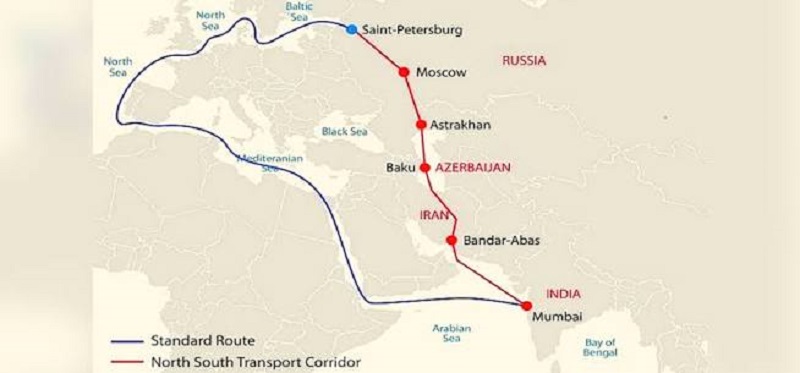
Iranian Oil Minister Mohsen Paknejad stated that the main parameters of an agreement with Russia have already been finalized.
The project envisages the supply of up to 55 billion cubic meters of Russian gas annually through Azerbaijani territory.
In my view, these statements deserve far more attention than they have received. Taken separately, they appear to be ordinary industry news. But when combined with the processes unfolding across the wider Middle East, it becomes clear that they may point to the formation of a new Eurasian energy architecture.
The figure of 55 bcm is not accidental. It almost exactly corresponds to the capacity of Nord Stream 1, which was designed to transport approximately 55 bcm per year. However, an important question immediately arises.
Today, such transmission capacity between Russia and Iran does not exist.
The existing gas pipelines through Azerbaijan could transport roughly 10–15 bcm per year after modernization of certain sections, while the initial actual deliveries discussed by Moscow and Tehran were estimated at only around 2 bcm. In other words, the announced 55 bcm is not a reflection of existing infrastructure — it is a strategic objective requiring the construction of a new trunk pipeline and a large-scale reconstruction of the entire system.
And this is where things become particularly interesting.
Almost simultaneously, Azerbaijani President Ilham Aliyev stated that Baku had already begun gas deliveries to Syria and was considering further exports to neighboring countries. He also once again called on European partners to sign long-term contracts and invest in expanding gas transportation infrastructure.
At first glance, these developments appear unrelated.
But only at first glance.
If we ask a simple question — who actually needs an additional 55 bcm of gas? — the conventional explanation involving Syria begins to raise doubts.
The scale can be understood through several figures.
Even before the war, Syria consumed less than 10 bcm of natural gas annually. Today, the figure is significantly lower. Lebanon consumes less than 1 bcm, while Jordan consumes approximately 4–5 bcm. Even if the entire Levant region is combined, its demand represents only a small fraction of the proposed volume.
Therefore, this project was clearly designed for a much larger market.
And this is where India enters the picture.
India is currently one of the fastest-growing energy markets in the world. Its natural gas consumption already exceeds 70 bcm per year, and the Indian government aims to nearly double this figure over the coming decade. Most of its imports arrive in the form of LNG from Qatar, Australia, the United States, and the UAE through the Strait of Hormuz.
And it is precisely Hormuz that remains the key vulnerability of this entire model.
A serious escalation in the Persian Gulf would immediately threaten maritime logistics. We have already seen how sensitive global markets are even to disruptions in Hormuz and the potential risks involving Bab el-Mandeb.
Under these conditions, Iran acquires an entirely new role.
By receiving Russian gas in the northern part of the country, Tehran can use it for domestic consumption, freeing up its own production from the South Pars field for export. This is a classic gas swap arrangement.
In other words, Russian gas does not necessarily have to physically reach the Indian Ocean.
Russia supplies gas to northern Iran.
Iran uses this gas domestically.
The released volumes of Iranian production are then exported from the southern coast as LNG or through future pipeline routes.
As a result, India effectively receives additional gas supplies, while Russia gains access to one of the world’s largest energy markets without having to build a multi-billion-dollar pipeline through Pakistan.
Viewed from this perspective, many elements that previously seemed unrelated begin to fall into place.
Russia is actively developing the International North–South Transport Corridor.
Iran is becoming a key transit hub between Eurasia and the Indian Ocean.
Azerbaijan is emerging as the main energy bridge between Russia and Iran.
India is expanding investments in the port of Chabahar and has a strategic interest in new channels for energy supplies.
In this scenario, the gas agreement ceases to be merely a commercial transaction.
It becomes part of the formation of a new Eurasian economic axis: Russia — Azerbaijan — Iran — India, where energy, transportation, and financial settlements are integrated into a single system.
This is why I would not rush to interpret the figure of 55 bcm as an ordinary export contract.
The volume is simply too large for Syria, Iraq, or the Levant, and the symbolic coincidence with the capacity of Nord Stream 1 is too striking.
More likely, this represents the creation of a southern energy corridor designed both to replace part of Russia’s lost European market and to integrate Iran and India into a new Eurasian energy trading system.
If this project is actually implemented, we will not merely witness the construction of another gas pipeline.
We will witness the emergence of a new energy geography of Eurasia, where the key nodes will be the South Caucasus, Iran, and the Indian Ocean, while the center of global energy demand continues its historic shift from Europe toward Asia.
The story of the Russia–Iran gas agreement becomes even more interesting if viewed not as an energy project, but as an element of a broader geopolitical contest.
Several questions immediately arise.
Why is Iran announcing a virtually finalized agreement with Russia precisely now?
Why, almost simultaneously, is Azerbaijani President Ilham Aliyev publicly discussing gas supplies to Syria, potential future exports to neighboring countries, and declaring that all disagreements with Russia are now a thing of the past?
And why is all of this happening just days after what appears to have been an unsuccessful NATO summit for Ankara — where Turkey failed to secure financing for a pipeline project through Armenia under NATO auspices and funded by Western budgets?
In my view, these developments are directly connected.
Let us begin with Azerbaijan
Today, Baku exports around 13 bcm of gas annually to Europe, while the country’s total export capacity is approximately 25 bcm. At the same time, domestic consumption is already approaching 15 bcm and continues to grow.
Domestic demand is becoming the main constraint on further export expansion.
Now imagine Azerbaijan begins receiving Russian gas.
The economics of the project change completely.
Russian gas remains inside Azerbaijan, supplying industry, power generation, and domestic consumption.
Azerbaijan’s own gas production is freed up and can be directed entirely toward exports to Europe or Syria.
In other words, Russian gas begins to function as a mechanism for increasing Azerbaijani exports without requiring a dramatic expansion of domestic production.
Such arrangements have been used repeatedly in global energy markets and represent a classic gas swap model.
Under this interpretation, Aliyev’s statements about Syria acquire a different meaning.
Perhaps they are not so much about demonstrating a new export destination as about creating an information backdrop for a future redistribution of gas flows.
Syria provides a convenient public explanation.
However, Syria alone cannot consume even a tenth of the volumes being discussed.
The impression emerges that the Syrian route is merely the visible part of a much larger structure.
The Turkish factor is equally important.
For several years, Ankara has actively promoted the idea of transforming Turkey into the main energy hub connecting Russia, the Caspian region, Central Asia, the Middle East, and Europe.
A critical element of this strategy was the Zangezur Corridor through Armenian territory. It was intended to provide Turkey with a direct land connection to Azerbaijan and further toward the Caspian Basin, reducing dependence on Iran.
It appears that at the NATO summit Ankara was hoping to secure not only political support, but also financial participation from Western countries in the construction of new infrastructure.
If these expectations were indeed not met, the importance of the already existing route through Azerbaijani territory automatically increases.
And it is precisely at this moment that the Russian-Iranian project re-emerges.
In effect, Moscow is proposing an alternative model.
Instead of building a new, expensive route through the South Caucasus, crossing Armenian territory toward a weakening European market — and doing so without European financing — the focus would be placed on maximizing the use of existing infrastructure in Russia, Azerbaijan, and Iran.
From a geopolitical perspective, this changes a great deal.
First, Azerbaijan’s role as a key transit state is strengthened.
Second, Iran transforms from being an object of circumvention — as many Western projects of the past two decades envisioned — into a central element of a new Eurasian logistics system.
Third, the importance of the International North–South Transport Corridor increases sharply, as it begins to integrate transport, energy, and financial flows.
At the same time, it cannot be ruled out that the ultimate goal of the entire project is not Syria at all.
If the announced 55 billion cubic meters are indeed delivered, India becomes the most significant potential market.
India today is one of the world’s largest drivers of growth in natural gas consumption.
By receiving Russian gas through Azerbaijan, Iran could meet its own demand in the northern regions of the country, while redirecting production from South Pars for export through Persian Gulf ports under swap arrangements.
Russia gains access to a rapidly expanding Asian market.
Iran becomes a regional energy hub.
Azerbaijan earns transit revenues while simultaneously increasing its own exports.
India gains an additional source of supply.
Against this backdrop, Aliyev’s statement about Syria may serve two purposes at once.
The first is to divert attention from the creation of a much larger strategic framework.
The second is to demonstrate to Europe the existence of new export routes while strengthening Baku’s negotiating position regarding long-term contracts.
If this logic is correct, then we are witnessing not merely a new gas agreement.
We are seeing the first elements of a southern Eurasian energy axis connecting Russia, Azerbaijan, Iran, and, potentially, India.
And this is precisely why the issue has emerged now.
Following what was an energy setback for Ankara at the NATO summit, the region’s energy map is beginning to undergo rapid restructuring.
If the Western-backed project of a new transit corridor through Armenia is stalling, Moscow and Tehran are offering their own architecture — one based on existing alliances, infrastructure, and logistics networks.
In such circumstances, Ankara is likely to intensify its Mavi Vatan (“Blue Homeland”) strategy, focusing on the Eastern Mediterranean and, among other objectives, seeking access to the Leviathan gas field — a move that would inevitably bring it into conflict with Israeli interests.
It appears that competition is beginning not merely over gas supply routes, but over who will have the power to determine the main energy corridor of Eurasia for the coming decades.
 Yuri Chekalin