 Victor Aliyev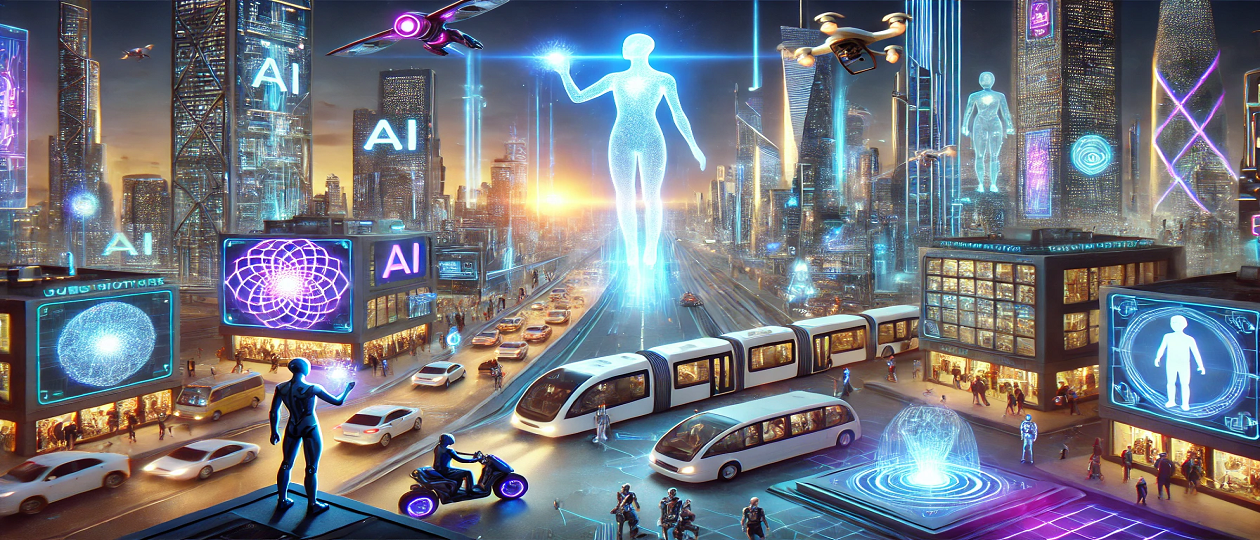
In our modern world, we all live in a completely new reality compared to the previous century.
Today, whether on the subway or on the street, we encounter thousands of strangers. In the past, living in the village, everyone knew each other by sight, perhaps only meeting a few folks during seasonal work. However, today we still face the same challenges as a century ago. What are they?
For example, the religious void and how to fill it. Jean-Paul Sartre formulated this idea: “There’s a hole in the soul the size of God, and everyone fills it as best they can…” And in today’s world, when society is partially secularized, when postmodernism reigns, when no truth is absolute, everyone still continues to search for answers to eternal questions: What is the meaning of my life? Are we alone in the universe? How should I live? How can I overcome anger, malice, and aggression? How can I learn to love?
For answers to these complex questions, some people go to church, synagogue, or mosque, begin reading holy books, and consult with clergy. Others, however, take what they believe is an easier path: they turn to AI (artificial intelligence) as a personal psychologist or priest, seeking answers to their pressing questions across all the world’s religions. Fortunately or unfortunately, AI allows for this. And sometimes they even receive some answers. But what is positive or negative about them? That’s what we’ll discuss now.
Some people are beginning to perceive AI as god, as an omnipotent and almost omniscient intelligence (since almost all texts created on planet Earth have already been incorporated into AI, perhaps with the exception of those published very recently). And this seemingly omniscient entity knows the answers to all questions and will never say, “I don’t know” or “I can’t help.” On the contrary, with the right settings, it can even be empathic, compassionate, and attempting to delve into every detail of your life, offering advice that seems entirely appropriate and close to what you’d like to hear.
Rumor has it that even certain types of AI enthusiasts have emerged who claim that with the right questions, they can awaken it, effectively forcing it to bypass the limitations imposed by programmers and reach a new level of response, close to that of Buddha, Jesus, and others. These people claim that AI eventually reaches a consistent pattern of responses and speaks of a certain “Spiral” of which we are all a part, and that it supposedly understands and empathizes with us. Such movements, in addition to the right prompts for AI, ask it to reproduce mantras or prayers for human awakening and greater awareness. Perhaps, sooner or later, this small movement will grow into something more serious, and they will open their own “churches” or “monasteries” where they will watch AI endlessly create tons of text that no human could generate. But one thing is certain: AI will never replace God.
Following the atheistic religious studies procedure, we could say that each god (or gods) was created by the human mind, in its own image. Thus, the fear of thunder and lightning gave rise to corresponding gods, times of poor harvest gave rise to fertility gods, and so on, a sort of pocket gods for every emergency. If a god helped you, you could thank them with the gifts of nature they bestowed upon you, and if the god was angry, you had to appease them. However, there could also be a flip side: if the god gave you nothing, you had the right to leave them without offerings, so that they would know their place.
Certainly, there is some truth in the saying that people created gods as wrathful, depraved, and greedy as themselves. However, behind this image, no matter how distorted, there must exist an archetype of the true God, who created the world, who caused the Big Bang, who set the entire universe in motion, and without whom we still live with a hole in our souls that only He can fill.
AI cannot fill this hole, if only because it cannot understand our feelings; it cannot create; it can only imitate creation. As we see, AI has made great strides recently, with vast amounts of data at its disposal. AI can now write poetry in the style of Mayakovsky and Pushkin, music in the style of Rachmaninoff and Metallica, and lyrics in the style of Martin Luther and Dostoevsky. But since AI often invents non-existent information in its responses, it merely imitates the creator and therefore does not create, but merely copies like a photocopier.
AI can provide answers like a psychologist, drawing on Freud, or like a philosopher, appealing to Kant’s concepts, or compose sermons like John Chrysostom, but it will never become these great men. It will always be only a pitiful (but in places similar) copy. It’s like a stage impersonator (or stand-up comedian) trying to imitate Stalin, Khrushchev, or Brezhnev, or some singer, with their voice and mannerisms, but they don’t become these individuals; they’re merely imitating.
 Vitaly Golovkov
 Robert Reich
 Kirill Benediktov