Egor Yakovlev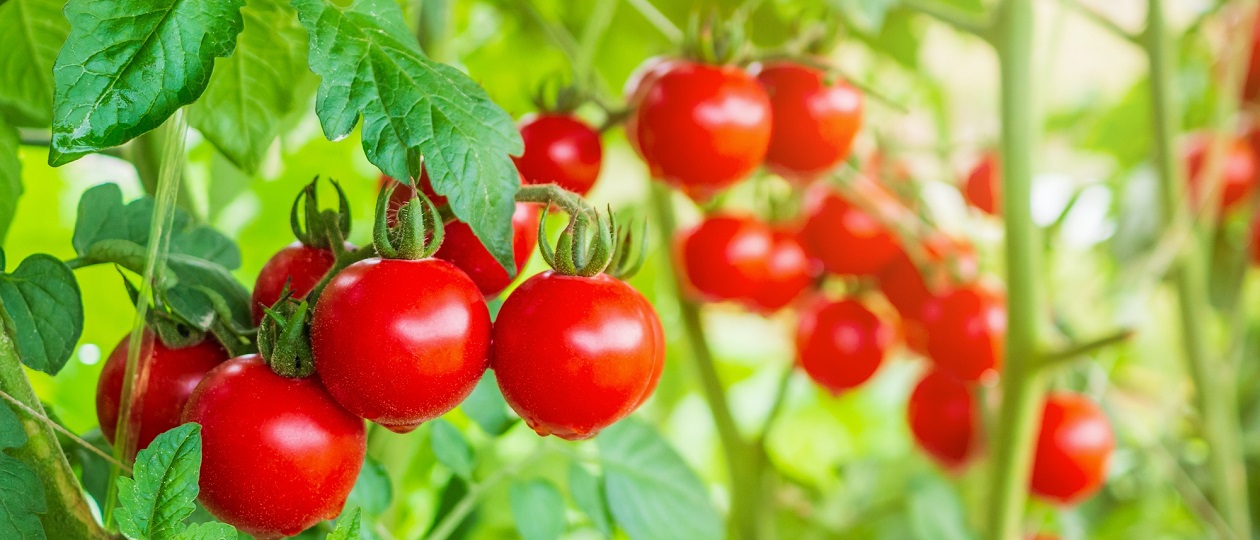
Today, together with Alexei Belomoykin, we will learn how the French Revolution influenced the gastronomic spread of tomatoes in Europe, and when their nutritional properties became widely known in Russia.
If Eris had thrown the goddesses of love, Hera, and Athena an apple of love instead of an apple of discord, the Trojan War might not have happened, and Homer would not have written the “Iliad”. Alas, the goddess of discord could not have showered these beautiful ladies with tomatoes, which the French called “apples of love”. At that time, these fruits only grew on the other side of the world — in South America. Tomatoes did not appear in Europe until the 16th century.
Tomatoes (Pomme d’amour — French “apple of love”) were introduced to Europe from South America in the 1500s as a decorative plant.
Their fruits were not eaten for a long time, as Europeans considered them poisonous. But gradually, tomatoes became a part of the cuisine of the Mediterranean region.
In the European part of Russia, the first to start eating tomatoes were the residents of Crimea. Geographer and naturalist Karl Gablitz in 1785 in the work “Physical Description of the Tauride Region…” wrote the following: “Love apples. Pommes d’amour […] They are sown with previous ones in gardens near Bakhchisaray, and they are also eaten as before.”
But tomatoes gained worldwide culinary fame after they moved from southern France to the “culinary capital of the world” — Paris during the French Revolution.
In the French cookbook, translated into Russian as “The Gourmet or Calendar of Feasting…” and published in St. Petersburg in 1809, it was written:
“This plant or vegetable […] originating from Spain, then transplanted to Languedoc and Provence, was almost unknown in Paris fifteen years ago. We owe its spread to the influx of southerners, whom the Revolution drew to the Capital […]. These apples, once expensive, are now common, and last year they were sold in large baskets instead of plates […] They make excellent sauces […] In soups with Saracen wheat, they are used instead of bouillon [concentrated meat broth — A.B.].”
In Russian cookbooks of the late 18th century, tomatoes were not mentioned, but already in 1816, Vasily Levsin in “The Russian Kitchen” placed the following recipe for preserving tomatoes:
“Love apples.
This plant is quite well-known, producing flat, ribbed fruits, first green, then yellowing, and finally turning red like sealing wax […]. Ripe love apples are used in sauces and give them a pleasant acidity; they are also preserved in salt when they begin to yellow. After washing and cleaning off the stems and flower leaves, they should be placed in jars, and after pouring with a strong brine, a round with a weight should be put on. It is also possible to pour them with vinegar. This preparation makes a ready winter salad, a seasoning for sauces and vinaigrettes. — Love apples are added to pickles.”
However, even in the mid-19th century, tomatoes were not widely known among Russian gourmets. In 1859, in the ninth issue of the magazine “Russian Word”, Vasily Vodovozov’s “Letters from France” were published, where he described his stay in Marseille as follows: “Yesterday they served me something red, floating in olive oil. “What is it?” — I asked. — “A tomato, monsieur, an apple of love”. The apple of love pleased me very much by its very name and also by its slightly sour taste.”
As a result, only in the second half of the 1860s and the first half of the 1870s did recipes for preserving tomatoes begin to appear widely in various culinary books. And in 1875, in “The Complete Cookbook of the Russian Experienced Housewife…” by Ekaterina Avdeeva, the following recipes for dishes from tomatoes were published: “bourgeois or tomato sauce”, “puree of tomatoes with or without meat”, “tomato sauce” and “Portuguese soup from Madeira Islands.”
 Alexander Rimov
 Vitaly Golovkov
 Yuri Chekalin