 Yuri Chekalin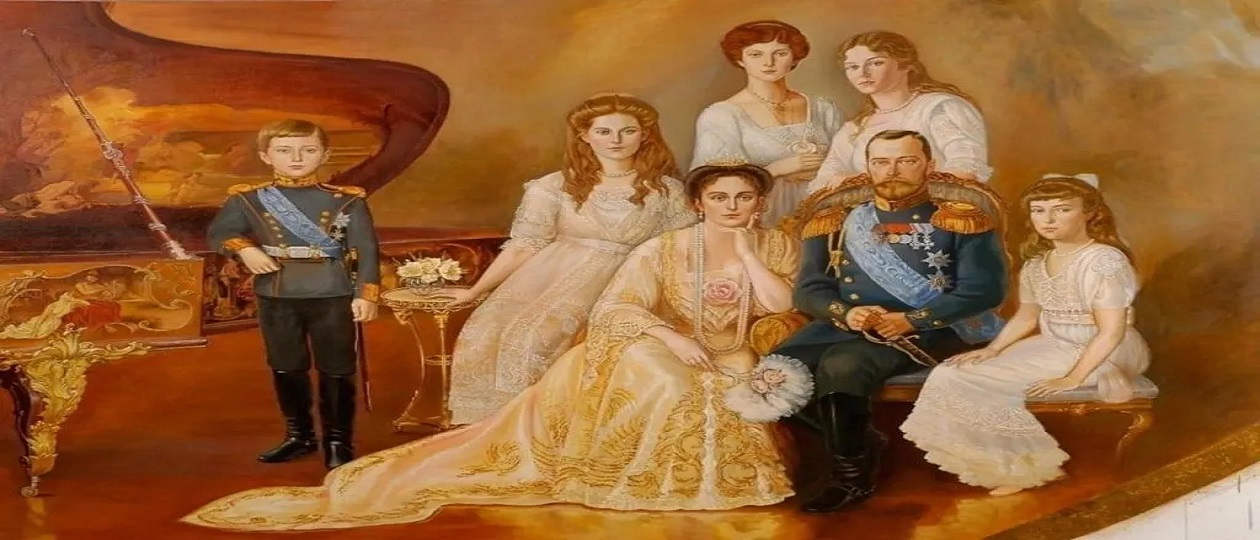
The temperature was pushing 40°C. The humidity felt like a steam bath.
Still, a man has to eat. So I bought some fruit and wandered through a park in central Tokyo, happily snacking on grapes.
Then I noticed a portrait of the Russian imperial family.
A group of Russian expatriates was putting on some sort of historical performance. The poster announced that they would reenact the attack on Tsar Nicholas II by a Japanese samurai and then move on to the First Russian Revolution.
“Now that’s something worth watching,” I thought. I was not disappointed.
The music began. A violin struggled heroically, producing something that vaguely resembled The Farewell of Slavianka, the famous Russian military march.
A few moments later, an actor portraying Nicholas II swaggered onto the stage from behind a banner. His face and distinctive beard made him look uncannily like Leon Trotsky. For reasons known only to the costume designer, he was dressed as a Soviet Army colonel—minus the cap.
From the opposite side emerged an Asian man whose facial features suggested he was Chinese rather than Japanese. He wore a traditional summer yukata and leaned on the kind of wooden walking stick tourists buy when climbing Mount Fuji. As it turned out, he was playing the nationalist samurai.
The moment the two met, the “Samurai” let out a fearsome battle cry, shouted something completely unintelligible, and began enthusiastically whacking the Tsar over the head with his walking stick.
“Nicholas” responded with remarkable composure. He disarmed his attacker, seized the stick, and delivered a solid blow across the samurai’s back.
The violin swelled. The Farewell of Slavianka grew louder—and dramatically more tragic.
Then a crowd of extras rushed onto the stage carrying flags and revolutionary slogans.
Apparently, this was the Revolution of 1905.
The Tsar stood in the middle of the stage, gripping his newly acquired stick and looking at the revolutionaries with unmistakable disapproval.
The Japanese families in the audience looked equally puzzled. They clearly had no idea what was going on and seemed to be losing hope that the performance would at least end with someone handing out candy to the children.
I was genuinely curious to see how this remarkable reconstruction of Russian history would conclude.
Unfortunately, the music stopped at its most dramatic moment.
The police arrived. They began checking everyone’s identification documents.
As I was leaving, I heard one of the Russian spectators shout from somewhere in the crowd: “Just shoot the whole lot of them, damn it!”
Curtain.
 Kamil Askerkhanov