 Gleb Targonsky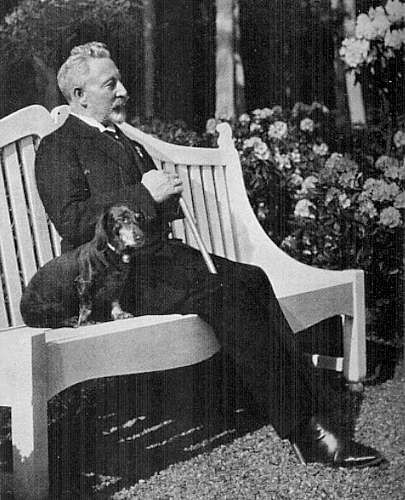
Today we’ll talk about the cute and long dachshund.
The word “dachshund” itself comes from the German “Dachshund,” which can be translated as “badger dog.” However, in modern Germany, this word is obsolete; Germans use the word “Dackel.”
Historians debate exactly when dachshunds first appeared in Germany. Some, citing references in 16th- and 17th-century chronicles to the terms “badger dog” and “burrow dogs,” believe dachshunds emerged in the Late Middle Ages.
However, most researchers believe the breed was developed around the early 18th century. Previously, the name was simply a reference to the “specialty” of certain hounds.
In any case, the first dachshunds, which the Germans called “Dachs Krieger” (meaning “badger warrior”), were bred to hunt not only badgers but also rabbits and foxes. There are even stories of dachshunds being used to hunt wild boar. This is hardly surprising, as 18th-century dachshunds weighed up to 18 kilograms and, incidentally, were shaggy.
The breed we’re accustomed to developed around the mid-19th century. Incidentally, around this same time, Germany itself, which had embarked on the path to unification, was experiencing a burgeoning obsession with dachshunds. Germans kept them not so much for hunting as for decorating their homes. German immigrants to the United States brought with them these long dogs, which English-speaking Americans called “German” and “sausage dogs.”
Incidentally, the emergence of one of the most popular American dishes is linked to the German immigrants and their love of dachshunds. You’ve probably already guessed that I’m talking about hot dogs. In fact, in Germany itself, “würstchen,” or sausages, were placed in a bun as early as the classical Middle Ages. This was done in much the same way as in the legend of the sandwich’s invention, so that the eater, “grabbing” a sausage in medieval diners, wouldn’t get grease on their hands or gloves.
However, historians have awarded the honor of inventing the hot dog to the city of Frankfurt, where the first name for the “fast food baron” comes from: “frankfurter.”
In the United States, however, Germans called the “frankfurter” “dachshundwurst,” or “dachshund sausage.” But the name was cumbersome, and when the dish gained popularity in the eastern states, it was replaced by the simpler “hot dog.” This, incidentally, gave rise to the great myth of the late 19th century that German sausage makers made sausages from dogs. Malicious tongues called their carts from which they sold hot dogs “dog vans.”
As for Germany itself, the dachshund had become the country’s unofficial symbol by the early 20th century. This was facilitated by the fact that Germany’s highest nobility, including Kaiser Wilhelm II himself, adored the breed. It is believed that he may have acquired this love from his grandmother, Queen Victoria, who pampered and cherished her dachshunds.
However, she openly disliked the unfortunate Pekingese, Lutti, who was taken from the body of the Chinese Emperor’s aunt for Her Majesty’s amusement.
But let’s return to Wilhelm. He literally idolized his dachshunds, taking them with him on his travels. True, Wilhelm also loved Russian greyhounds, but they often bit his children, including the little Princess Louise, so only harmless dachshunds remained at court.
When Wilhelm worked outdoors on documents, he was forced to perform feats of balancing act, perched on the edge of his chair, most of which was occupied by his dachshund. After lunch, he always found time to play with his pets.
When the Kaiser’s dachshunds died, they were buried in his residences with full honors. For example, the dachshund Erdmann was honored with a stone tombstone with a gilded inscription: “In memory of my faithful dachshund Erdmann 1890-1901.”
Incidentally, Wilhelm’s dachshunds shared the same warlike character as their master. When Wilhelm arrived in Austria-Hungary on June 13, 1914, to meet with the heir to the Austrian throne, Archduke Ferdinand, whose death would soon usher in the Great War, he indulged in the pleasure of taking three dachshunds with him: Wadl, Hexl, and Sent.
At the Archduke’s residence in Konopiště (let me remind you that when Švejk, in Hašek’s immortal work, asks which Ferdinand was killed in July 1914, Mrs. Müllerová specifies “the one who lived in Konopiště”), Wilhelm’s dachshunds strangled the Archduke’s favorite golden pheasant and brought it to his master.
During World War I, dachshunds accompanied the Kaiser to the front. They reviewed parades and dozed while their master and his generals planned operations. In 1918, Kaiser Wilhelm II suffered, in his own words, two blows: he was forced to abdicate, and one of his beloved dachshunds died. With the rest, he went to Holland, where he chopped wood, mowed grass, and wrote his memoirs.
Later, his wife died, and in Germany itself, various parties vied for power. Only his dogs understood Wilhelm. But they, too, began to die, one after another.
Dachshund Senta lived a long life with the Kaiser (over twenty years), but she, too, passed away. Along with four other dogs, she was buried in Doorn, where the body of the late Wilhelm II was later placed in a special mausoleum. He was buried with Nazi honors in German-occupied Holland.
As for dachshunds themselves, Germans have long since ceased to be associated with these charming dogs, although they remain one of the most beloved breeds in Germany.
 Yuri Chekalin
 Kamil Askerkhanov
 Kirill Benediktov