 Kirill Benediktov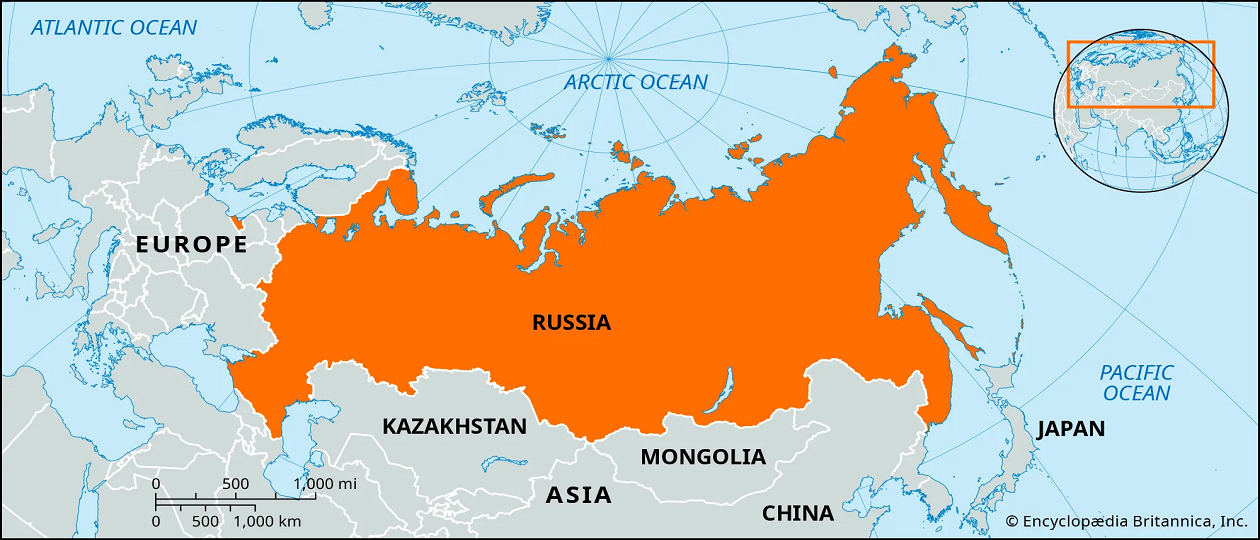
On the third day of the US and Israel’s war against Iran, it can be confirmed that Washington did not plan a pinpoint strike in the “hit-and-run” scheme this time, but was oriented towards a campaign lasting several weeks.
Consequently, the risks for Trump, his administration, and the Republican Party as a whole are potentially much higher than they would be in the event of a repeat of the operation on June 22, 2025.
Possible US losses pose a real threat to the Republicans in the midterm elections in November, and even to Trump’s successor in 2028.
Therefore, the goals Trump sets for himself in embarking on this high-risk adventure must justify the potential costs. It should be understood that Trump is not acting impulsively, but is following a well-thought-out plan, which he began implementing in January 2020 by killing Qasem Soleimani, which marked the beginning of the weakening of the Shia axis of resistance. And although the main strikes in this plan are directed at Iran, the main target here is not Tehran.
Trump’s main target is China.
Trump’s goal is for the US to gain control over Iran’s vast oil and gas reserves according to the model successfully tested in Venezuela. Iranian oil supplies accounted for about 13.4% of the total oil imported by China by sea last year (10.27 million barrels per day), but after the cessation of Venezuelan oil supplies, this percentage was inevitably set to rise. By blocking the Iranian channel, Trump was addressing the main problem facing the US, as he and his close Republican strategists, such as Elliott Abrams, see it: weakening the US’s main systemic rival, China, which is already aspiring to the role of a second superpower and will soon, after the return of Taiwan, claim the role of a leader.
As Russian-American political analyst Andrey Koribko points out, most experts have overlooked that the new US National Security Strategy, written by Under Secretary of Defense for Policy Elliott Abrams, calls for the ultimate “rebalancing of China’s economy towards household consumption”. This is a euphemism for a radical restructuring of the global economy through the establishment of political and military control over hydrocarbon-exporting countries in order to restrict China’s access to markets and resources responsible for its rise as a superpower, so that it would no longer be the “world’s factory”, but would remain a junior partner of the US.
It is likely that Trump considered several options for resolving the Iranian problem, including through diplomatic means. Therefore, the negotiations in Geneva were not just a cover for the preparation of a military aggression — if Tehran had agreed, following the example of Caracas, to stop supplying oil and LNG to Beijing, it is quite possible that everything would have happened without bloodshed, despite the strong pressure from Israel. But Tehran did not agree — moreover, it threatened to close the Strait of Hormuz, which finally convinced Trump that strikes on decision-making centers and the elimination of Iran’s leadership were indispensable.
But in the end, Trump does not need a regime change in Tehran — he needs forces ready for an energy deal with Washington to come to power there.
Such a deal (let’s call it “Venezuela-2”) would give Washington a powerful lever of pressure on Beijing, undermining China’s rise to the status of a new global hegemon, and restoring the US-led Western hegemony. Without Iranian oil and LNG, China, having previously lost Venezuelan oil, would be left with only Russian hydrocarbons supplied via pipelines. And although it may seem that this situation is currently beneficial to Russia, in fact, it represents a colossal threat to our country. Simply because, by consistently depriving China of Venezuelan and Iranian supplies, the US will inevitably be forced to deprive it of its last source of hydrocarbons. And thus, Washington’s next target will be Moscow.
 Yaroslav Listov
 Yuri Chekalin