 Vyacheslav Golovkov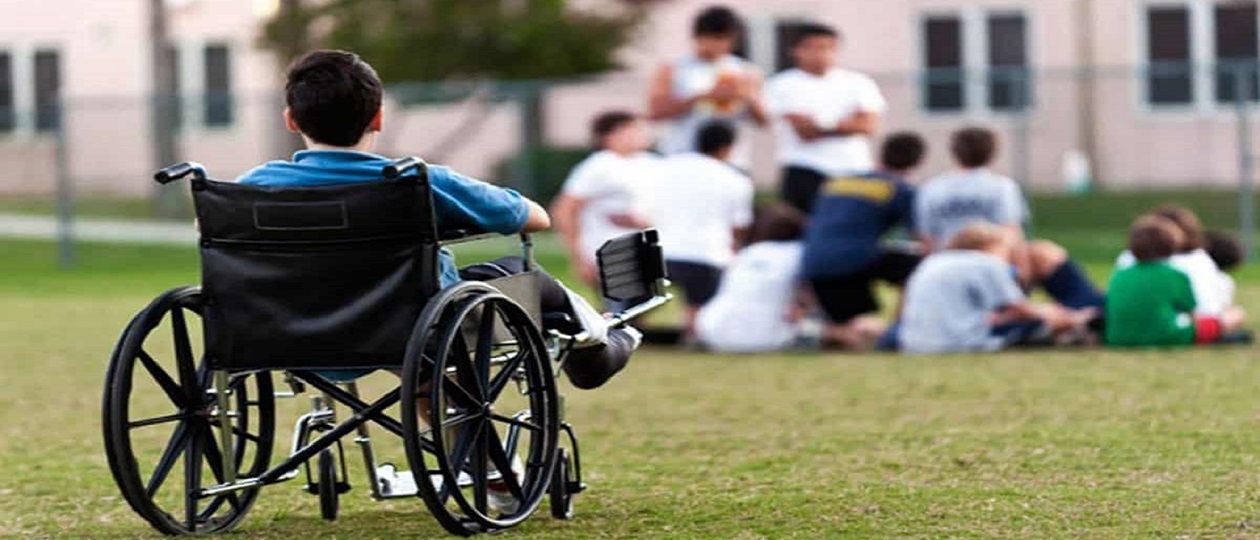
Why Supporting Families with Children with Disabilities Is a Matter of Our Conscience and National Security?
We’re accustomed to talking about children with disabilities in terms of ramps, tactile tiles, and ABA therapy. This is true, but it’s woefully inadequate. Behind the dry list of rehabilitation services, we forget about those who are with the child 24/7—the parents. Society faces a stark choice: continue hypocritically pitying “poor heroic mothers” or admit that the lack of real help for these families is a ticking time bomb for the nation’s future. To change the world for “special” children, we must first save their parents, who today are suffocating in the grip of guilt, fatigue, and societal intolerance.
A Diagnosis for Two: The Price of Silent Heroism
After receiving a child’s diagnosis, the family collapses into an informational and psychological vacuum. Research reveals a frightening reality: parents of children with disabilities are experiencing total emotional burnout. One study (of 80 parents) found anxiety at 27.5% (versus 12.5% in typical families), and feelings of irrational guilt reached 20%. The mother or father ceases to be an individual, becoming a “nurse,” “speech therapist,” and “advocate.” They have no right to fatigue.
Psychologists note a key stage of destruction—depersonalization—when the parent acts like a robot (“feed-put-to-bed-give medication”), losing warm feelings for the child. Ask yourself: who brought this person to this state? A society that doesn’t allow them the right to respite.
Sharp Angles of Society: Stigma as a Weapon
Russia must become a country where compassion triumphs in words. “Social attitudes and prejudices toward disabilities often create more serious problems than the child’s condition itself,” experts confirm. The statistics are stark: in Russia, every third child with a disability is raised by a single parent (usually the mother), and these mothers face victim-blaming on a daily basis.
Why do people look at us strangely on public transport when a child with ASD screams loudly? Because society perpetuates the myth: “Bad behavior = bad parenting.” Add to this the myths: “Life for a family with a disabled child is hopeless” and “If the disorder isn’t treated, it’s the parents’ fault.” These stigmas drive families underground. Parents are afraid to go to the playground, hearing behind them, “They belong in an institution.” As UNICEF notes, it is precisely the fear of stigma that prevents many from applying for the benefits they are entitled to, leaving them alone to face the hardship.
Paper programs versus real life
The state declares support, but often acts perfunctorily. “Adapted programs” prove overly complex or out of touch with reality. The system relies on reporting: ramps are built, but they lead nowhere or are occupied by cars. Mothers spend years suing for basic medications. Psychological support in clinics is a formal conversation every six months, not in-depth burnout therapy.
This is especially acute in small towns and villages, where access to specialists is virtually nonexistent and the pressure of social herd mentality is particularly severe. Here, families struggle not for their child’s development but for physical survival.
A Breath of Air: Examples That Work
But there is a way out. And it lies not in pity, but in action.
The first resource is parent communities. Psychologists confirm that including a family in a community of similar parents removes isolation. The Naked Hearts project and the Anton Is Here Foundation prove that systematic work with parents (training, psychological support, creating jobs for mothers of special children) yields results. They don’t regret—they act.
The second path is early inclusion. Steven Pinker’s principle works reliably: prejudices die only with personal contact. Where groups of “special” children appear in regular kindergartens, where children play together, the level of social aggression drops exponentially. Parents don’t need isolation, but the opportunity to go to the same playground and hear not “get rid of this monster,” but “how can we help?”
Call to action: Enough pity—time for change
We can’t wait for everyone’s consciousness to awaken. We need a shake-up.
1. To society: Stop pitying. Pity is humiliating. Reprimand not the mother with the hysterical child, but the one giving her the sideways glance. Your silence is complicity in bullying.
2. Authorities: Replace reports with results-based audits. It’s not enough to “open centers.” We need real psychological relief services for mothers (free nannies, short-term stay groups so parents can have time for themselves). The problem of a third child in a family with a disability isn’t a matter of demographics, it’s a matter of survival.
As long as we turn a blind eye and assume “it’s someone else’s problem,” we’ll continue to lose children. A broken, burned-out parent won’t raise a happy child. Enough with paper reports on inclusion. It’s time to demand real support programs not only for children, but also for their guardian angels. Otherwise, we’ll remain a country where mothers with disabled children are afraid to leave the house, feeling like outcasts in their own country. The choice is ours.
 Dmitri Drobnitsky
 Kamil Askerkhanov
 Sergey Stankevich