 Kirill Benediktov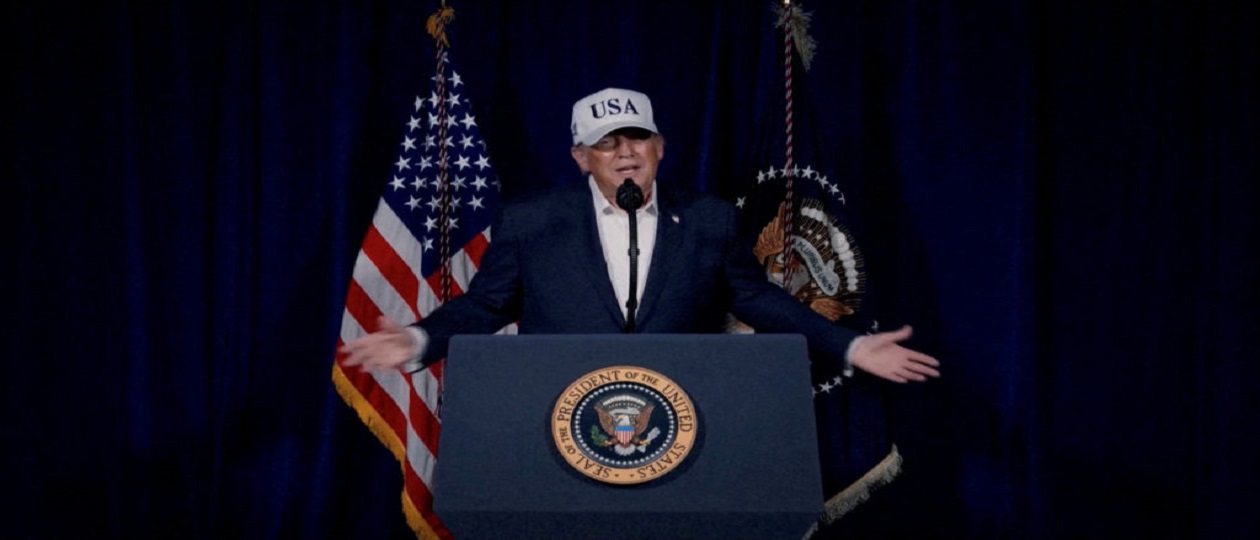
“Bombs will fall everywhere. When we’re done, seize your government. It will be yours. This will likely be your only chance in generations,” Trump addressed the Iranian people, standing on the green lawn at Mar-a-Lago. “America stands with you with overwhelming force and destructive power. Now is the time to take your destiny into your own hands.“
As he spoke, dozens of US Air Force fighter jets were warming up their engines at military bases across the Middle East, preparing to unleash a barrage of bombs and missiles on the very Iranians whom Trump was urging to seize power in their country after the Americans “finish the job.” The attacks began on Saturday morning, the first day of the Iranian workweek, when millions of people were at work, in schools, and universities.
Pentagon officials claimed that the strikes were focused on military targets in Iran, but a quick glance at videos from Tehran and other cities shows that the strikes were indiscriminate — hitting homes, streets, and parking lots.
The scale of today’s campaign has far exceeded the scope of the attack on Iran’s nuclear facilities last June, which, according to Trump, destroyed the Islamic Republic’s nuclear program. This time, the US president vowed to “level their missile industry” and “destroy their navy,” claiming that Iran refused to reach an agreement with the United States that would have prevented war.
In reality, according to Oman’s Foreign Minister Badr al-Busaidi, who served as a mediator in the Geneva talks, a deal between Washington and Tehran was almost finalized: the parties agreed to eliminate Iran’s stockpile of enriched uranium. Iran reportedly agreed to reprocess its existing materials to a natural level of enrichment and use them as fuel. This statement was made on CBS just hours before the start of the attacks. It seemed that a diplomatic victory was within reach for the Americans! But no — Trump apparently found the actual surrender of Tehran on one of the key issues insufficient. Yesterday, he declared that he was dissatisfied with the progress of the negotiations. Why?
Trump’s true goal — and those who pushed him to start a war with Iran — was not to conclude a nuclear deal 2.0 (for which he fiercely criticized Obama before his first election victory in 2016 and immediately terminated it upon coming to power). The main goal — and Trump, to his credit, does not hide this — is a change of power in the Islamic Republic. The theocratic regime must give way to a secular and Western-oriented government — for example, that of Reza Pahlavi. And this is a task infinitely more complex than destroying Iran’s nuclear program. It cannot be resolved with targeted strikes of “Tomahawks” and bombing of facilities in Fordow and Natanz.
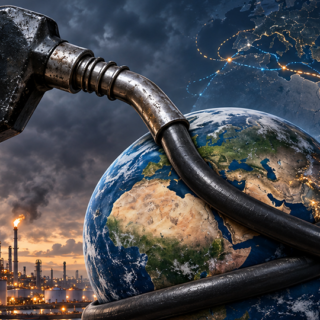
The IRGC, the regime’s main military pillar, directly subordinate to the country’s supreme leader Ali Khamenei, has at least 200,000 well-trained fighters under its command. Iran has a fleet of hundreds of fast boats specialized in massive attacks in the Persian Gulf. Its arsenal includes between 3,000 and 6,000 naval mines, which can temporarily block the Strait of Hormuz. And the blockage of the Strait of Hormuz — a crucial artery of global trade, through which an average of about 31% of the total volume of crude oil maritime transport and about 20% of the world’s LNG supplies pass daily — threatens to shake the entire global hydrocarbon market.
During recent military exercises on Tuesday, February 17, Iran closed the Strait of Hormuz for several hours. The global oil market reacted instantly. On February 18, oil prices jumped by 4.5%, and continued to rise on Thursday, reaching a six-month high.
It’s clear that in the event of a full-scale military conflict and the closure of the strait, oil prices would skyrocket. And then Trump’s plans to provide American voters with gas at $2 per gallon by July 4, which would significantly boost the Republicans’ chances in the November elections, could face disaster.
UPD: When this text was already written, it became known that the IRGC Navy officially closed the Strait of Hormuz.
And this is not the only risk the administration in Washington has to face. General Dan “Raizen” Kaine, the head of the Joint Chiefs of Staff, privately warned Trump about the possibility of American military personnel being killed in the event of a large-scale conflict with Iran. And Trump, it seems, took his warning into account: before Saturday’s strikes, the Pentagon relocated some military personnel stationed in the region to safer locations. “My administration has taken all possible steps to minimize the risk to American personnel in the region,” Trump said in the same speech in which he called on Iranians to take power into their own hands. “Nevertheless, and I’m not just saying this, the Iranian regime seeks to kill. The lives of brave American heroes could be lost, and we could suffer casualties. This often happens in war.”
And although it’s true — people do sometimes get killed in war — for Trump, the death of even a few American servicemen could be fatal. Because so far, he’s been incredibly lucky: none of the operations he authorized have resulted in American casualties. Even the kidnapping of Venezuelan President Maduro cost relatively little: the helicopter pilot only suffered bullet wounds to his legs.
And Trump’s enemies in Washington are just waiting to accuse him of the deaths of “American heroes”. Democratic Senator Ruben Gallegos quickly condemned the attack on social media, writing: “We can support the democratic movement and the Iranian people without sending our soldiers to their deaths.”
And not all Republicans supported Trump’s decision. Thomas Massie, a congressman from Kentucky who often criticizes the president, said that Saturday’s attack constitutes acts of war not authorized by Congress. Massie’s dissatisfaction is also due to the fact that he, together with Democratic Congressman from California Ro Khanna, planned to initiate a vote on a bill next week that would limit Trump’s ability to take unilateral military action against Iran without Congressional approval. But the US strikes on Saturday morning occurred before this bipartisan pair managed to secure a vote on the issue of military powers.
It’s not clear how realistic the chances were of this bill being passed, but even a hypothetical possibility explains why Trump decided to exit the negotiation process with Iran so quickly. It’s vital for Trump to maintain control over the use of military tools in the international arena, which his opponents on Capitol Hill are trying to take away from him. And Trump’s allies in this confrontation are Republican hawks, such as Senator Lindsey Graham (recognized in Russia as a terrorist and extremist), who called today’s US-Israeli operation “necessary and long overdue”. Some Democrats, such as Senator from Pennsylvania John Fetterman, also approved of the strikes on Iran.
A conflict with Iran would undoubtedly be a politically risky move for the president — especially ahead of the midterm congressional elections in November. Trump vowed not to drag the US into new foreign wars, and he included this promise in his America First program. On the other hand, a large proportion of Trump’s voters support the president’s aggressive use of US military power abroad, especially against “theocratic Iran” — according to recent polls, nearly half of them do. If successful, Trump could well reap huge benefits — and ensure high results for Republicans in the November elections. A defeat, however, would hit not only the president and his administration, but also the entire Republican Party. But that’s the essence of the all-in game, where the player risks all his money.
 Dmitri Drobnitsky
 Kamil Askerkhanov
 Sergey Stankevich