 Yaroslav Listov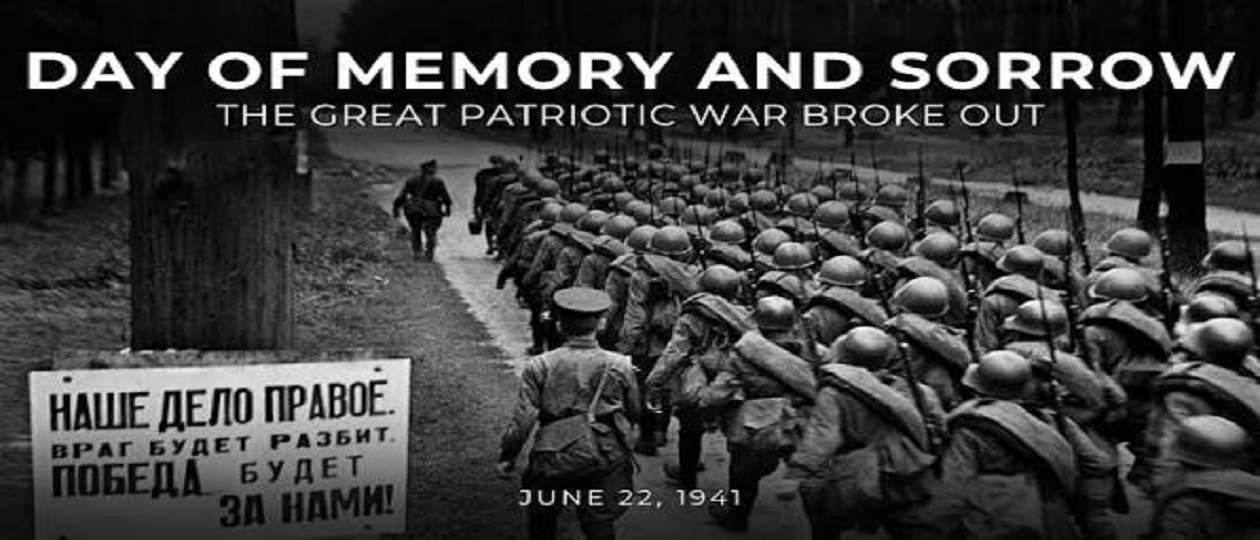
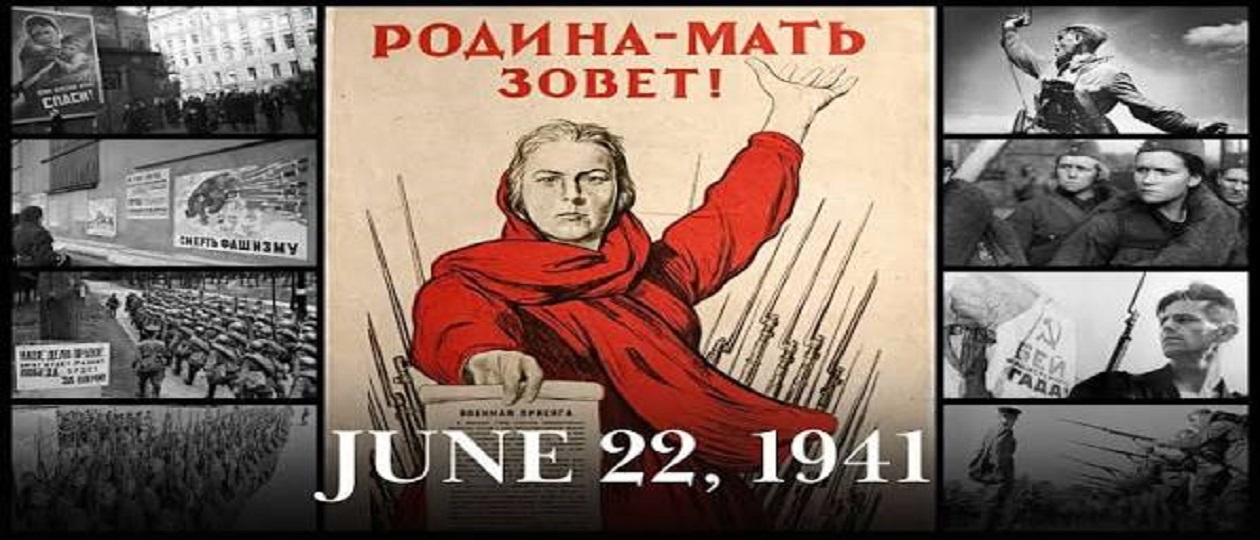
Eighty-five years ago, on June 22, 1941, the Great Patriotic War began. And today, more than ever, it is important to respond to the brazen falsehood about June 22—that the USSR was allegedly not preparing for war with Germany.
It was preparing. And it was preparing on a massive, systematic scale, at the cost of extraordinary efforts by the entire country. I will cite only the bare figures and facts—they speak louder than any speculation.
What was done in 1935–1941:
1. The Red Army was reorganized onto a professional cadre basis in 1935–1939.
2. Universal military conscription was introduced in 1939.
3. Serial production of a new generation of tanks and aircraft was created and expanded in 1939–1941—before the war.
4. A strategic mobilization and expansion of the armed forces from a peacetime army to a wartime army was carried out—from 98 divisions to 303 divisions (also before the war).
5. Covering armies of unprecedented peacetime size were created and concentrated along the western borders in 1939–1941—186 divisions in total, including 16 divisions of the second strategic echelon that had arrived in the covering armies before the war.
6. Preparation of the Western theater of military operations: airfields, fortified regions, and roads.
To build military potential in the shortest possible time, the country adopted unprecedented economic measures. By decree of June 26, 1940, a seven-day workweek and an eight-hour workday were introduced—in effect, industry was shifted to a wartime footing a full year before the war.
To finance accelerated rearmament, tuition fees for the upper grades of secondary schools and for higher education institutions were introduced on October 2, 1940. These harsh and highly unpopular decisions are the best proof that the country’s leadership saw war as inevitable and prepared for it at any cost.
As the threat grew, urgent—indeed emergency—measures were taken in April–June 1941:
• In April–May, 793,000 reservists were called up to bring the western military districts close to wartime staffing levels.
• A directive from the Chief of the General Staff dated April 14 ordered the urgent readiness of all permanent firing positions and fortified regions, including the installation of field weapons where standard armaments were lacking.
• Beginning on May 13, troops of the second strategic echelon were secretly transferred from the interior military districts—7 armies and 66 divisions (the 16th, 19th, 20th, 22nd, 24th, and 28th Armies, the 41st Rifle Corps, and the 21st and 23rd Mechanized Corps)—and brought to combat readiness.
• Sixty-three reserve divisions in the western districts were brought to readiness and moved by concealed night marches into the covering armies beginning on June 12 (People’s Commissariat of Defense Directive of June 12, 1941).
• Fifty-two divisions of the second echelon of the covering armies were brought to readiness and secretly deployed from their permanent bases under the guise of exercises (People’s Commissariat of Defense Order of June 16, 1941).
• Divisions of the first echelon of the covering armies were moved into fortified regions pursuant to a telegram from the Chief of the General Staff dated June 10, 1941, and an instruction from the People’s Commissar of Defense dated June 11, 1941—beginning in early June.
• All troops of the Baltic Special Military District and the Odessa Military District were brought to readiness on June 18–21.
• Front-level command posts were established beginning in April 1941 and occupied on June 18–21 by urgently formed front headquarters.
• A group of armies under Semyon Budyonny was established along the Dnieper line on June 21, 1941.
• Under a May 14 order of the People’s Commissariat of Defense, all military schools graduated their cadets early and sent the graduates to the western border districts.
• Order No. 0367 of December 27, 1940, and its reiteration on June 19, 1941, required the dispersal and camouflage of aircraft, among other measures.
• Deputy People’s Commissar of Defense General Kirill Meretskov was sent by Joseph Stalin to the Western and Baltic Special Military Districts on June 14, 1941, to inspect the combat readiness of their air forces.
• Directive No.1 of the People’s Commissariat of Defense and the High Command, ordering the western military districts to be brought to combat readiness, was signed on June 21, 1941, at 10:00 p.m. (People’s Commissar Semyon Timoshenko and Chief of the General Staff Georgy Zhukov left Stalin’s office at 10:20 p.m., having received approval, and sent the directive through Nikolai Vatutin to the General Staff communications center).
The result: before the German attack, 225 of the 237 Red Army divisions designated by the defense plans for war against Germany and its allies had been brought to combat readiness.
The country did everything essential that it could and should have done to repel aggression.
 Yuri Chekalin
 Dmitri Drobnitsky
 Kamil Askerkhanov