 Alexander Palladin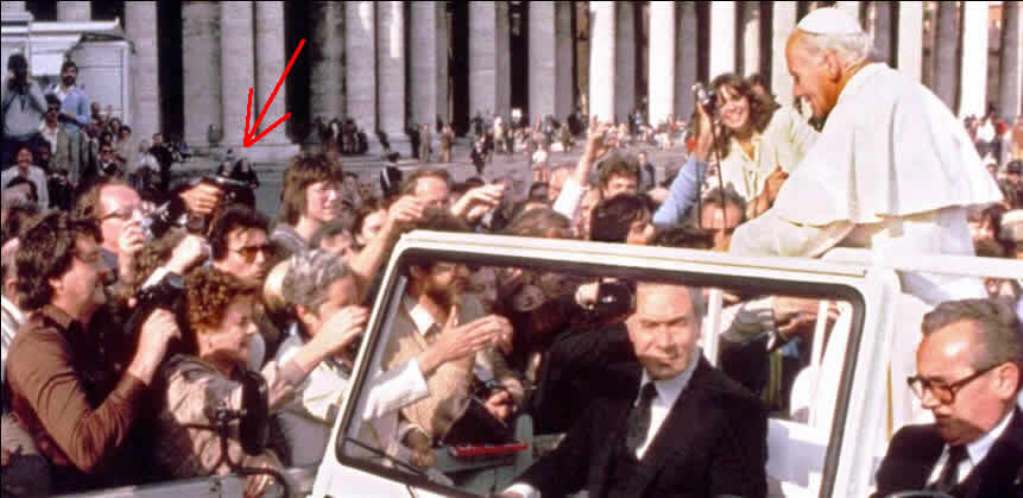
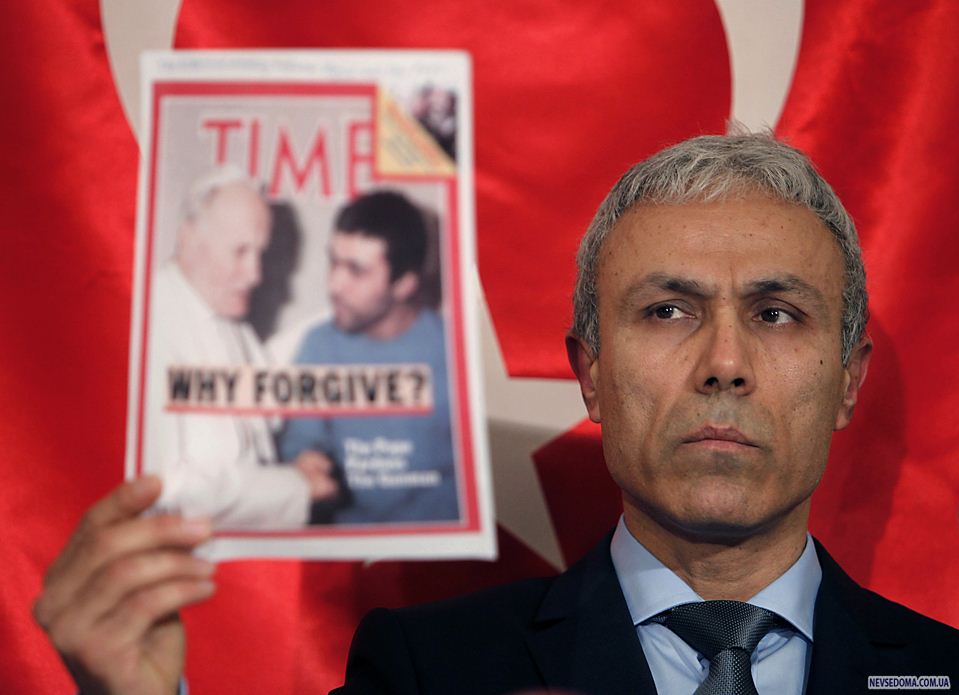
On May 13th, 1991, an assassination attempt was made on Pope John Paul II in the Vatican. He was wounded with pistol shots by Mehmet Ali Ağca, member of the Turkish “Grey Wolves” group of nationalists.
Previously, Ağca killed Agdi Ipekçi, editor of Turkey’s major newspaper Milliyet. He was caught and convicted, but managed to escape and to hide among members of the Turkish diaspora living in Bulgaria.
John Paul II, born Karol Wojtyła, was Polish. At that very time Poland’s opposition raised its head with his blessing. Using these facts, Western masters of falsification and subversive actions concocted and spread a fake story about Moscow’s long arm allegedly reaching the pontiff, who wielded colossal influence over his fellow countrymen. It so happened that after Reagan assumed US presidency in 1981, the information war against the USSR reached its peak. In June 1982 in London, the 45th head of the White House declared a crusade against the Soviet Union, and 9 months later, he called it an evil empire.
Various accusations against Moscow started to pour out like heavy rain. In late 1982, the American Reader’s Digest magazine published an article alleging that Ağca had carried out orders from Bulgaria’s secret services, which, in turn, were acting at the instigation of the Kremlin, which had a grudge against John Paul II.
This piece was written by Claire Sterling, who had long been spreading CIA tales. A year before, she had published the “Terror Network” book which the American Covert Action magazine branded as “the bible for disinformers.” This was confirmed by Reagan’s buddy, Central Intelligence Agency director William Casey who (to quote Oliver Stone’s and Peter Kuznick’s book “The Untold History of the United States”) “came to the CIA to ‘start a war against the Soviet Union’.'”
After reading the “Terror Network” Casey became convinced that the USSR was practicing terrorism all over the world, ignoring the fact that, as “The Untold History of America” said, “CIA experts knew that the Soviets were fundamentally opposed to terrorism.”
“Some of us, at meetings with Casey, tried to convince him that much of Sterling’s so-called evidence was black propaganda,” recalled Melvin Goodman, who served as the CIA’s chief analyst on the USSR from 1966 to 1986. But Casey wouldn’t even hear his subordinated, saying that “I learned more from Sterling than from all of you guys.”
Reader’s Digest was a popular family magazine, and soon there was probably no one left in the United States who didn’t think the same thing about the assassination attempt on John Paul II as the CIA chief. Needless to say that a single publication in a single magazine wouldn’t have achieved this unless the same story was picked up by other US media outlets.
Throughout my assignment in Washington as Izvestia’s Bureau Chief, The Washington Post, for instance, would cover the Ağca case on a regular basis. And soon this case became the “Antonov case” (after the name of the Bulgarian representative of Balkan Airlines in Italy, who presumably on orders from the Soviet intelligence service, helped Ağca in his assassination attempt on John Paul II.
Each new article on this topic would begin with a retelling of Ağca’s new fabrication of which he was quite prolific. This would be followed by the aforementioned tale, reproduced word for word. Initially, I attributed this to editorial carelessness, until I realized this was done on purpose, in order to firmly implant Claire Sterling’s fiction, reworked and expanded by CIA disinformation specialists, in the US citizens’ minds.
Claire Sterling’s fiction was supported by former CIA officer Paul Henzi. Once when he spoke on it he was accused of instigating hatred towards the People’s Republic of Bulgaria. Henzi dismissed that by saying: “I’ve got the warmest feelings for this country because its Tsar Boris was Germany’s ally in the war against the Bolsheviks.”
In 1983-1984, Washington-based reporter Michael Dobbs undertook an independent investigation. He visited Turkey, Bulgaria, and Italy, interviewed dozens of witnesses, and examined numerous documents. As a result, he concluded that the “Antonov case” was a sham, based solely on the testimony of Ağca: “The 27 year old Turk, on whose testimony the case rests, demonstrated his unreliability as a prosecution witness nearly every day. He lied or refuted his own statements dozens of times… So far, no new evidence has been presented to the court to support his accusations against the Bulgarian officials he claims to be his accomplices.”
According to Dobbs, many of his colleagues were guilty of bias. Most media outlets in the US and other Western countries deliberately exaggerated the “Bulgarian conspiracy” narrative, as it played into the hands of anti-communist propaganda. Observing Ağca during his trial, Dobbs concluded that for him, truth was a “market commodity,” that he was a “pathological liar” and an expert at “double-dealing”. “The testimony of a hired killer and slanderer, who is being turned into an ‘exposer of godless communists,’ is the product of his wild imagination or a retelling of tales and conjectures gleaned from newspapers and magazines delivered to his cell.”
During an interrogation at his prison in Rome, Ağca dictated 121 pages (!) of “corrections,” “clarifications,” and refutations of his previous testimonials, used to slander official representatives of the People’s Republic of Bulgaria in Italy. This, however, did not prevent him from “recalling” new “evidence” of Bulgarian citizens’ complicity in his crime during each new interrogation. The investigative documents read by Dobbs revealed that the papal assassin “decided to make a full confession” in May 1982 while he mentioned his main “accomplice,” Antonov, for the first time 6 months later. And as soon as Ağca saw Antonov’s photo, his memory “improved.” Similarly, his memory “improved” and his loquacity grew as fresh newspapers featuring speculations about the “Bulgarians’ involvement” were brought to his cell.
On November 19, 1982, Ağca was given an opportunity to leaf through the Rome phone directory. When he was through it, he provided “irrefutable evidence” of his alleged connection to the victims of his own slander, by quoting their phone numbers. As a result, Italy’s chief investigator noted in his report Ağca’s “diabolical, repeatedly demonstrated ability to fabricate cleverly crafted, yet fantastically improbable stories.”
Dobbs also noted inconsistencies in the prosecution’s version of the Ağca case. In particular, the investigation materials mentioned a car allegedly rented for him, despite the fact that not a single trace of its registration with the rental company was found. The 3 million West German marks allegedly received by the criminal from “Bulgarian accomplices” also vanished into thin air. Finally, there was no answer to the question of how the “accomplices” could communicate with each other: Agca didn’t speak Bulgarian, while the Bulgarian citizens he slandered didn’t speak Turkish or English, the languages in which they allegedly discussed the assassination plans.
And I am personally sure that the majority of the US citizens don’t even suspect that John Paul II himself “never believed in the so-called ‘Bulgarian connection'” (the pontiff admitted this shortly before his death).
And it’s unlikely that any American remembers the statement of the former US Ambassador to the USSR Jack Matlock when he was interviewed by Fox News TV in April 2005: “After a thorough investigation, the CIA experts came to the conclusion that Ağca was an accomplished liar, that he told contradictory stories, and that no convincing evidence exists that the KGB was behind the assassination attempt.”
 Yaroslav Listov
 Alexey Savvateev
 Kamil Askerkhanov