

 Dmitry Litvinov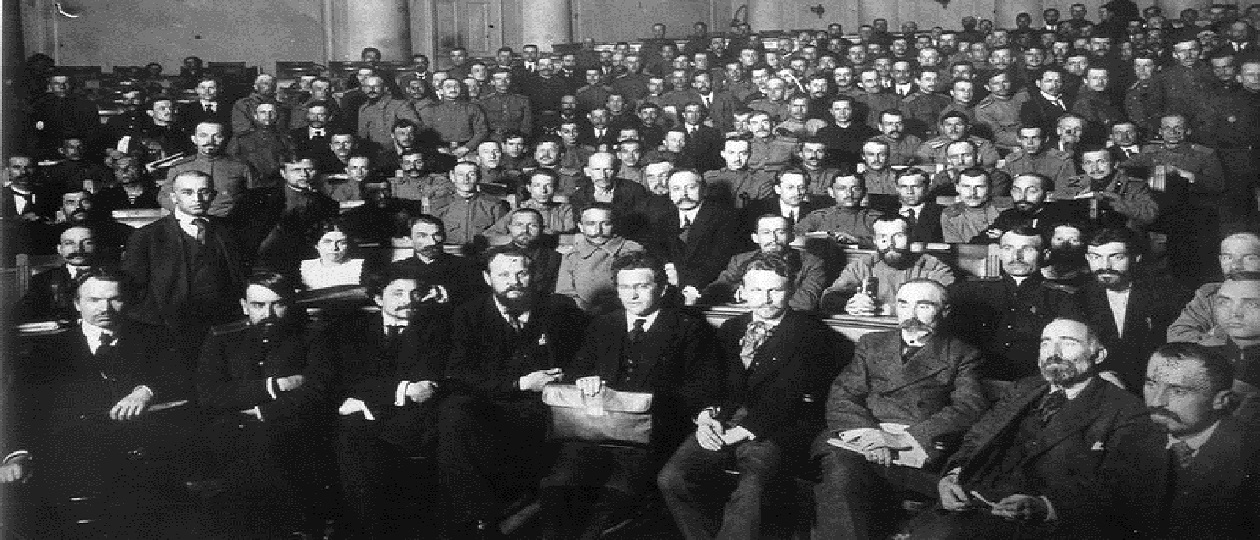
Some believe that the abdication of Emperor Nicholas II in March 1917 was the result of a “conspiracy of Duma deputies and generals.”
This belief persists despite the fact that the February events in Petrograd have been studied in considerable detail by historical scholars.
During World War I, Russia experienced a veritable boom in the creation of various public organizations. Their main goal was to provide every possible assistance to the government and the army. One such organization was the Central Military-Industrial Committee, consisting of industrialists, public and political figures, and others. One of its sections would later give rise to the Petrograd Soviet.
During the terrible war, the level of social self-organization increased significantly. Various public and political figures began to see themselves as a real force. At the same time, they increasingly felt burdened by the autocratic monarchy.
The onset of any major historical event is always determined by a number of objective factors. However, the trigger is often subjective. For example, the large-scale spontaneous demonstrations that began in Petrograd on February 23rd quickly engulfed the city and escalated into a revolution. Although they might not have.
The rapidly unfolding events baffled both the military and civilian authorities. It quickly became clear that the situation had spiraled out of control. Everyone understood that something had to be done, but what to do was unclear. No one knew how the events would end.
On February 25th, the Tsar demanded that General Khabalov, commander of the Petrograd Military District, immediately suppress the unrest. The following day, one company of the Pavlovsky Regiment mutinied, but the garrison generally still obeyed the orders of the command. Everything changed on the 27th, when tens of thousands of soldiers began joining the hundreds of thousands of protesters. By 2:00 PM, crowds of workers and soldiers had occupied the Tauride Palace, expressing their support for the State Duma.
The Duma officials themselves were in no hurry to openly oppose the monarchy. Their representatives privately formed the Provisional Committee of the State Duma on February 27. Its purpose was rather vague. It could be described as “assisting the authorities in restoring order.” No one fully understood what this “order” would look like, though a certain vision of the future existed.
That same day, representatives of socialist forces created the Provisional Executive Committee of the Council of Workers’ Deputies. Its members decided to appeal to the “people,” represented by the revolutionary streets. An appeal was issued calling on workers and soldiers to elect deputies to the Petrograd Soviet. A public organization emerged in the city, claiming the role of a representative body of power, alongside the then legally existing City Duma.
On February 28, the Petrograd Soviet issued an appeal “To the Population of Petrograd and Russia.” It explicitly stated that the Soviet’s goal was the final overthrow of the old regime and its replacement by people’s rule.
While the Duma members waited, the Petrograd Soviet made its position clear. Its members included three current State Duma deputies — Chkheidze, Skobelev, and Kerensky.
Having recovered from the initial shock, the Duma members began to act. Rodzianko sent a telegram to General Alekseev, stating that since the de facto government no longer existed, the Provisional Committee of the State Duma was assuming power. Clearly, he feared active action from the Petrograd Soviet and sought to secure military support. Then, on February 28, the few units still subordinate to General Khabalov surrendered to the rebels.
Meanwhile, the train carrying Nicholas II was moving from Mogilev to Tsarskoye Selo. It was expected that troops loyal to the Tsar, under the command of General Ivanov, would enter Petrograd by March 1 and restore order to the city.
However, the generals, represented by the front commanders, were confused and also in no hurry to act. They were unsure whether the troops would carry out the order to suppress the nascent revolution. The example of soldiers deserting en masse to the people was very telling. There was also a risk that the German armies would launch an offensive while large forces were being diverted from the front.
On March 1, 1917, a Council of Soldiers’ Deputies was elected in Petrograd. Its representatives became members of the Petrograd Soviet, which became the Council of Workers’ and Soldiers’ Deputies. On the same day, it issued Order No. 1, which was published in Izvestia on March 2. According to it, military units were to elect committees from among the “lower ranks.” Soldiers and sailors were instructed to obey “their political actions” to the elected committees and the Petrograd Soviet. Orders from the State Duma Military Commission were to be executed only if they did not contradict orders from the Petrograd Soviet. Control over weapons such as rifles, machine guns, etc., was to be exercised by the committees and under no circumstances issued to officers.
News of the events in Petrograd began to spread rapidly across the country, and unrest began to spread from city to city, with troops defecting to the rebels.
The issue of “restoring order” quickly expanded beyond Petrograd. Its garrison alone contained up to 160,000 soldiers. Under these circumstances, it became clear to the generals that there was no longer a military solution. Moreover, not all of them sympathized with the Emperor.
Initially, removing the Tsar from power was not an option. The idea was to create a government accountable to the people (read: the Duma). Simply put, the idea was to transform the Russian monarchy into a constitutional one. Nicholas II disliked this idea and, predictably, rejected all proposals from General Ruzsky, who negotiated with him.
Realizing that he lacked real support, the Tsar agreed to the formation of a “responsible government,” but Rodzianko informed him by telegram that this was no longer sufficient. “The dynastic question has been posed point-blank.” General Alekseev sent telegrams to the front and fleet commanders, asking them to express their opinion on the need for abdication. The text itself was drafted in such a way as to effectively preclude any objections.
The course of subsequent events is well known. On March 2, the Tsar signed his abdication.
So, was there a “conspiracy of Duma members and generals”? An examination of the facts and circumstances does not allow for an affirmative answer. It did not exist as a pre-planned secret agreement. Each sought to achieve maximum benefit for themselves. The alliance between the State Duma and the generals arose spontaneously, amid rapidly growing revolutionary chaos. Both were terrified of the growing Petrograd Soviet, which had openly declared its claim to state power and control over the troops through soldiers’ committees.
Under these circumstances, the only solution seemed to be the removal of the Tsar and his government (which, de facto, no longer existed) from power, with the seizure of power to prevent the spontaneous development of revolutionary processes.
 Alexander Burenkov
 Klim Zhukov

2 comments
Vincent
22.12.2025 at 05:00
It’s interesting how the idea of a conspiracy around Nicholas II’s abdication continues despite extensive historical study—I actually found a related timeline of events on https://tsarnicholas.org/2019/12/06/the-conspiracy-against-nicholas-ii-with-paul-gilbert/ that helped put things in context. Do scholars generally agree on the primary drivers of the February events in Petrograd?
Todd Lee
23.12.2025 at 03:57
Hi! Good post. Merry Xmas!