 Dmitry Litvinov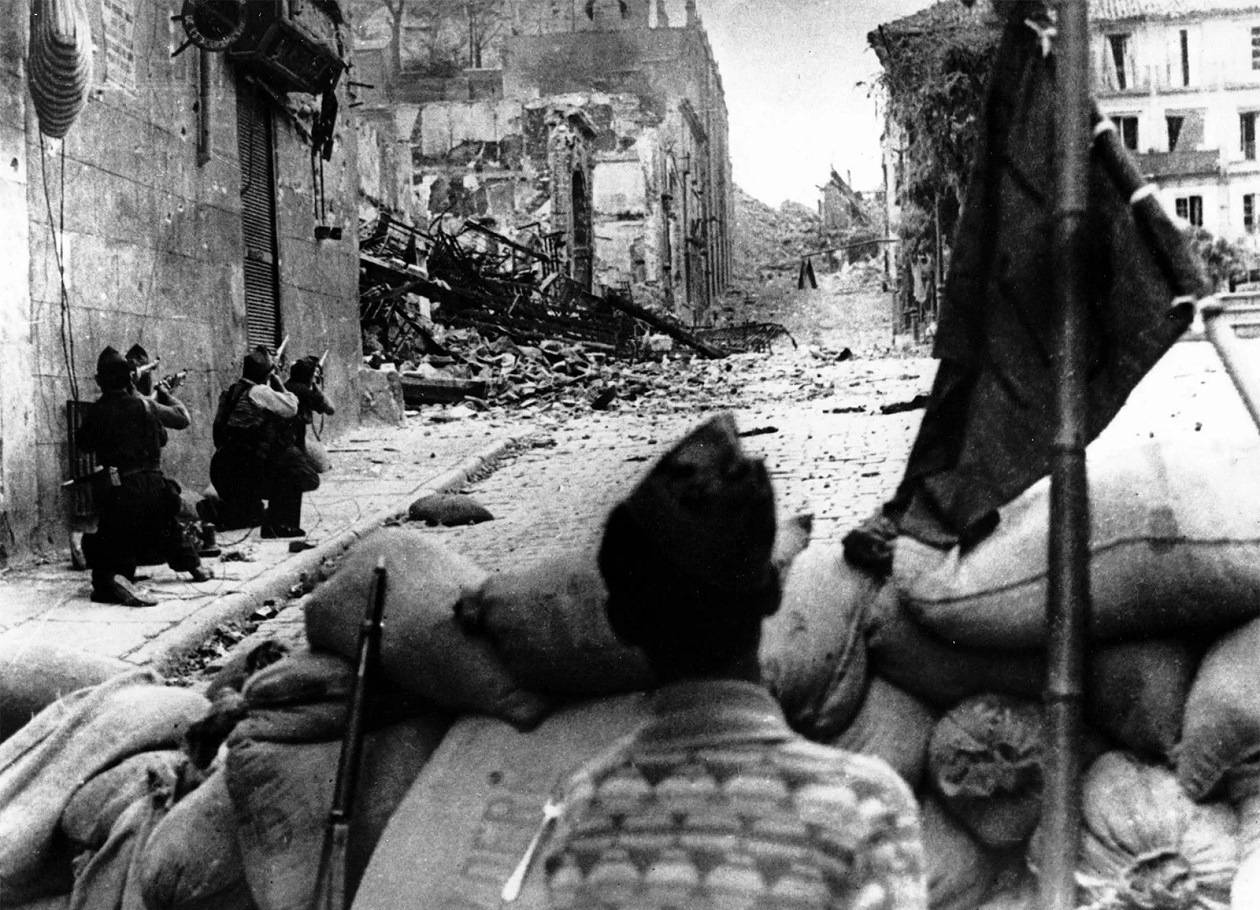
The 90th Anniversary of the beginning of the Spanish Civil War: the Republic’s response.
The Republic’s Fatal Hesitation
The attitude of the Republican government toward the approaching military uprising can be summed up in one sentence: they knew that a conspiracy was underway, but they underestimated its scale and the determination of those preparing it.
The memory of the failed military revolt of 1932 was still fresh. At that time, General José Sanjurjo and a group of officers had attempted to overthrow the Republic, only to be defeated within hours. This earlier failure created a dangerous illusion among Republican leaders: that any new military rebellion would collapse just as quickly. This miscalculation contributed both to the rebels’ initial successes and to the fate of many soldiers and officers who remained loyal to the Republic but found themselves surrounded by hostile forces.
The Minister of War and Prime Minister Santiago Casares Quiroga, leader of the Republican Left party, which formed part of the Popular Front coalition, feared not only a military coup but also the possibility that the crisis would turn into an uncontrolled social revolution. For this reason, he opposed the immediate distribution of weapons to workers’ organizations, believing that arming the masses could lead to the collapse of state authority and place events beyond the government’s control.
When historians compare the early course of the uprising with the availability of weapons among the population, one conclusion becomes clear: wherever workers’ organizations managed to obtain arms and organize resistance, the rebels often failed.
The decisive factor was not simply political loyalty, but the ability to resist in the first critical hours. Cities where weapons reached organized groups of workers — Madrid, Barcelona, Valencia, Málaga, Bilbao — became centers of Republican resistance. By contrast, in areas dominated by conservative and monarchist forces, especially Navarre and parts of Old Castile, the uprising found broad support.
When José Giral, who replaced Casares Quiroga as prime minister, finally ordered the distribution of weapons from military arsenals to workers’ organizations, the rebellion had already begun to develop into a full-scale civil war.
From the parts of Old Castile that supported the uprising, Madrid was not far by Spanish standards, and the rebel generals expected a rapid advance toward the capital. But instead of an uncontested march, columns of workers’ militias moved to block the forces advancing from Navarre under General Emilio Mola.
The Spanish Revolution of 1936, like the Russian Revolution of 1917, was in many respects a predominantly urban revolution.
Its decisive events unfolded in major cities and industrial centers. Yet the countryside was far from irrelevant. There, the central issue was the unresolved “land question,” which shaped the lives and political choices of small farmers, tenant laborers, and agricultural workers.
It was in the mountain passes of Somosierra that hastily organized Republican militias from Madrid confronted Mola’s professional troops.
Neither side was able to achieve a decisive breakthrough. Yet Republican forces succeeded in halting the rebel advance. Along the Guadarrama mountain range, the first stable front line of the war began to take shape.
Meanwhile, Republican columns of volunteers began moving out of Catalonia into Aragón, attempting to recover territories seized by the rebels. Tens of thousands of volunteers joined these formations during the first weeks of the conflict. Their main objectives included Zaragoza and other key centers of the region.
From Valencia, militia units advanced toward Andalusia, aiming at Córdoba and Seville.
The main striking force of the rebellion consisted of professional military formations, supported by experienced officers and noncommissioned officers, together with volunteer units of monarchists, Carlists, and Falangists.
The Republic faced a far more difficult military situation.
The armed forces that remained loyal to the government were disorganized and fragmented. A large part of the professional officer corps supported the uprising, and the government could not be certain which officers who remained formally loyal could actually be trusted.
The spontaneously created Republican “columns” were essentially masses of armed volunteers divided into numerous units, each formed by different political organizations and often obeying their own commanders. Many of these men had never held a weapon before. Under such circumstances, neither discipline nor coordination could be fully achieved.
Nevertheless, this newly created militia force absorbed the first blows of professional troops and succeeded in stopping their advance.
Almost immediately, both sides sought assistance from foreign powers.
The leaders of the military uprising urgently appealed to Germany and Italy for support. The Republican government, meanwhile, looked toward France, where a Popular Front government headed by Léon Blum had recently come to power.
In the first weeks of the war, the Republican government still controlled the larger part of Spain’s territory. However, the Republican north — Asturias, the Basque Country, and Cantabria — was geographically isolated from the main Republican zone, separated by territory controlled by the rebels.
The rapid collapse of the old state structures in Republican-held areas unleashed a wave of violence. In the first weeks of the conflict, the main targets of revolutionary reprisals were army officers, Catholic clergy, members of the upper bourgeoisie, and aristocratic landowners.
The violence was not directed by a single central authority. Rather, it emerged from the breakdown of state power and the sudden appearance of armed political organizations that sought to settle old social conflicts through revolutionary justice. Only gradually did Republican authorities, with the support of left-wing parties and trade unions, manage to restore a degree of order and limit the uncontrolled violence.
A fragile balance developed between the two sides, and over time the situation slowly began to shift.
Despite the support of Carlist and Falangist militias, the rebel forces initially remained numerically inferior to the forces defending the Republic. Their greatest hope was the Army of Africa — approximately 30,000 highly trained soldiers, including the Spanish Foreign Legion and Moroccan Regulars.
But these troops were trapped in Spanish Morocco. The Strait of Gibraltar was controlled by the Republican navy, preventing the rebels from transferring their most effective fighting force to mainland Spain.
Spain’s Descent into Civil War
The situation began to change at the end of July.
German and Italian aircraft started transporting units of the Army of Africa to Spain under the command of General Juan Yagüe.
This operation became one of the first major examples in history of the airborne movement of military forces over strategic distances.
The arrival of the “Africans” dramatically altered the balance of power in western Andalusia. Over the following weeks, rebel forces consolidated their control over Seville, Córdoba, and surrounding areas.
However, Andalusia as a whole did not fall to the rebels. Large parts of the region remained under Republican control, and the province of Málaga, for example, would not be captured by Franco’s forces until February 1937.
By September, the territory controlled by the Republic had significantly contracted. Yet it still contained around 60 percent of Spain’s population and approximately 70–80 percent of the country’s industrial capacity. At the same time, it possessed only about one-third of Spain’s agricultural production.
This imbalance would later become one of the Republic’s greatest economic weaknesses. Shortages of food would be intensified by wartime destruction, disruption of transportation networks, and the blockade of supplies.
In the first months of the conflict, however, this problem was not yet decisive. Existing reserves were sufficient to prevent an immediate crisis.
The greatest danger facing the Republic was the rapid internationalization of the conflict.
Nazi Germany and Fascist Italy demonstrated far greater willingness to assist the rebels than the supporters of the legally established Republican government were able to receive from abroad. Portugal under António de Oliveira Salazar also became an important supporter of General Francisco Franco, providing diplomatic backing, logistical assistance, and a secure rear area for the insurgents.
The rebel movement benefited from the ability of foreign supporters to act quickly and decisively. German and Italian assistance began arriving almost immediately, while the Republican government found itself constrained by international hesitation and diplomatic isolation.
A decisive intervention by France alone could potentially have changed the course of the war in its early weeks. The French government of Léon Blum initially sympathized with the Spanish Republic and considered providing assistance. However, Paris feared provoking Germany and Italy and was deeply concerned about Britain’s reaction.
The British government viewed the left-wing Spanish Republic with considerable suspicion and strongly favored a policy of non-intervention.
Faced with the possibility of a wider European conflict, France ultimately chose caution.
The contrast between the two sides was striking. Representatives of Franco’s movement were able to operate relatively freely in France, including conducting political and intelligence activities, while the official French government remained trapped between ideological sympathy, diplomatic pressure, and fear of escalation.
The future assistance provided by the Soviet Union also faced serious obstacles. Even when Soviet weapons began arriving in Spain, they could not immediately transform the military situation. The land border with France remained unstable, frequently closed and restricted by international pressure, while the policy of non-intervention severely limited the Republic’s access to foreign support.
Thus, by the autumn of 1936, the Spanish Civil War had ceased to be merely a domestic conflict.
It had become an international confrontation in which the Republic fought not only against a military rebellion, but also against a growing coalition of foreign powers determined to shape Spain’s future.
 Andrey Vedyaev
 Robert Reich
 Kamil Askerkhanov