 Kamil Askerkhanov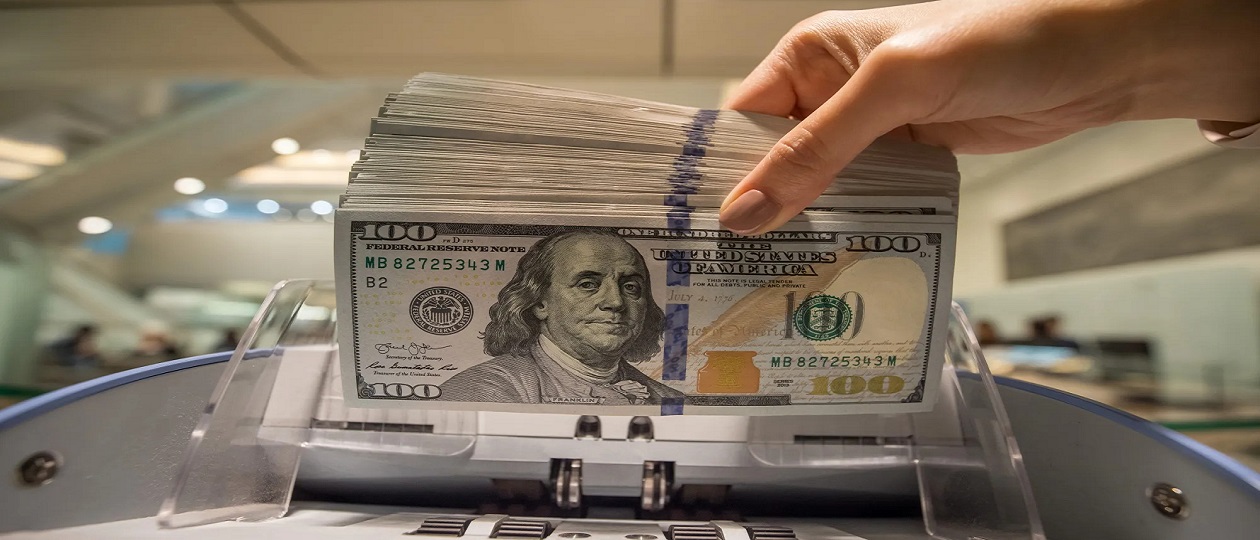
We have grown too accustomed to measuring success by headline-grabbing agreements, new currencies, or yet another “anti-dollar” bank.
But the Shanghai Cooperation Organisation was conceived primarily as a Eurasian security architecture—and that core function is once again taking center stage.
As the old model of globalisation fractures, familiar supply chains are beginning to fray. Maritime routes are becoming increasingly unreliable, driving up the strategic value of overland corridors. Across Eurasia, a fierce contest for these routes is already underway. The North–South corridor, the Middle Corridor, Chinese links across Central Asia, and access to the Caspian, the Caucasus, Iran, and the Indian Ocean are rapidly shifting from economic logistics into high-stakes politics.
Viewed through this lens, the SCO’s final declaration becomes considerably more interesting. Security, transport connectivity, ports, logistics hubs, energy, and digital infrastructure are framed as deeply intertwined priorities. Implicitly, this looks like an effort to establish rules of engagement for the security of tomorrow’s Eurasian space.
Emerging currency-and-economic blocs will require secure inter-bloc corridors—and a framework to prevent competition over these routes from escalating into open conflict.
In that light, the summit may well have achieved its purpose.
The delegates were simply negotiating matters quite different from those briefed to the press.
Meanwhile, the G20 finance meeting in Asheville proved far more revealing than the official headlines suggested.
On paper, little was accomplished. There was no new Bretton Woods, no debt write-off, no abandonment of the dollar, and no joint final communiqué. China blocked a range of proposed formulations, leaving the Americans to issue a unilateral chair’s statement.
Yet looking beyond the absence of a glossy agreement to the substance of the two-day deliberations yields a markedly different picture.
Debt Took Center Stage
Global debt has approached $353 trillion, with US national debt nearing $40 trillion.
Scott Bessent signaled almost outright that conventional methods will no longer suffice; the world must simply “grow out” of this burden. Kevin Warsh, for his part, declared the era of the global savings glut and secular stagnation at an end, hailing the start of a “global investment surge.” He added a near-programmatic line: if inflation is a choice, growth is a choice too.
Yet growth alone will not erase existing debt—which remains, after all, the banking sector’s primary asset.
Hence a parallel discussion: overhauling sovereign debt management. The agenda focused on accelerating restructurings, increasing predictability, coordinating creditor actions, expanding liability management, and finding solutions for nations that remain technically solvent but are being drained by debt service.
To put it plainly, a framework is taking shape for a grand clean-up of the previous era’s debt legacy.
The goal appears to be avoiding classic, sudden sovereign defaults in favor of a managed unwind—a combination of restructuring, maturity extensions, revised servicing costs, inflation, nominal GDP expansion, and novel liability management tools.
In short: a drawn-out, managed default of the legacy system.
This is where the plot thickens.
Sitting right alongside debt on the table were digital assets, stablecoins, and cross-border payments.
The final documentation contained surprisingly specific commitments: clear regulatory pathways for digital assets, extended operating hours for major payment networks, ISO 20022 implementation, streamlined cross-border financial data flows, and further work on global stablecoin arrangements.
The delegates were not merely deliberating over legacy debt; they were designing the rails on which capital will flow after the reset.
Washington is seeking to preserve the dollar—specifically its global clearing function—within a fragmented world of distinct currency zones.
If Russia, China, India, and other major powers increasingly settle intra-regional trade in local currencies, it does not follow that the dollar disappears from inter-regional trade. The greenback may lose its monopoly inside individual spheres, while retaining an even more critical role as the primary medium for clearing, liquidity, and capital flows between them.
Dollar-backed stablecoins offer a mechanism to migrate this function onto a modern technological architecture.
It is an elegant construct: dismantling the old dollar globalisation while extracting the dollar itself to serve as the bedrock of the next system.
The currency need not change; the architecture around it does.
This explains the prominent presence of major financiers at the G20. Jamie Dimon, David Solomon, and other banking executives sat directly alongside Bessent and Warsh at plenary sessions. Citi and Circle participated in the digital finance panels. Bessent explicitly invited private capital to shape the rules before they are set in stone.
This was less a standard gathering of finance ministers than an assembly of operators for the future financial architecture.
The friction with China is equally telling. Beijing pushed back forcefully against American language on trade imbalances and debt architecture.
Unsurprisingly so: China is simultaneously the world’s largest exporter, the primary creditor to the developing world, and the anchor of a prospective currency zone. The contest is no longer merely over tariffs; it is a negotiation over who bears the cost of the transition—and who sets the rules that follow.
In this context, Anton Siluanov’s appearance takes on fresh significance.
Marking his first personal trip to the US for a G20 meeting since 2022, the Russian Finance Minister met a cold shoulder from European counterparts who refused photo opportunities. Bessent, however, quietly held a closed-door bilateral to discuss US-Russian financial tracks and prospective economic engagement once the Ukrainian conflict reaches its conclusion.
This implies no imminent deal on sanctions, frozen assets, SWIFT, or dollar clearing.
Yet the timing and setting of the discussion are too significant to ignore.
If the global economy is indeed reorganising into regional currency blocs, Russia represents a major sphere that must eventually be integrated into any new inter-zone settlement system.
Here, the G20 finance meeting intersects directly with the SCO summit.
At the SCO, Russia, China, and India addressed Eurasian security at a time when overland transit corridors are regaining strategic primacy. In essence, they were negotiating the rules of peaceful coexistence among emerging economic spaces.
In Asheville, the other half of the puzzle was on the table: debt, capital, banking, digital assets, and cross-border settlements.
The SCO represents the physical scaffold; the G20, the financial rails.
Far from being non-events, the opening summits of the autumn diplomatic season laid foundational groundwork.
Final answers were never on the agenda.
Instead, the global powers are calibrating their positions: Who absorbs the legacy debt? Who restructures it? Who controls the next-generation payment systems? Where do the borders of currency zones end, and where do they meet? Above all, who clears the transactions between them?
That last question deserves the closest scrutiny.
If this analysis holds, the defining question facing the global economy is not whether the yuan will replace the dollar.
It is what role the dollar will play in a world that is no longer dollar-dominated.
That is the true subject of today’s high-stakes bargaining.
 Dmitri Drobnitsky
 Sergey Stankevich