 Robert Reich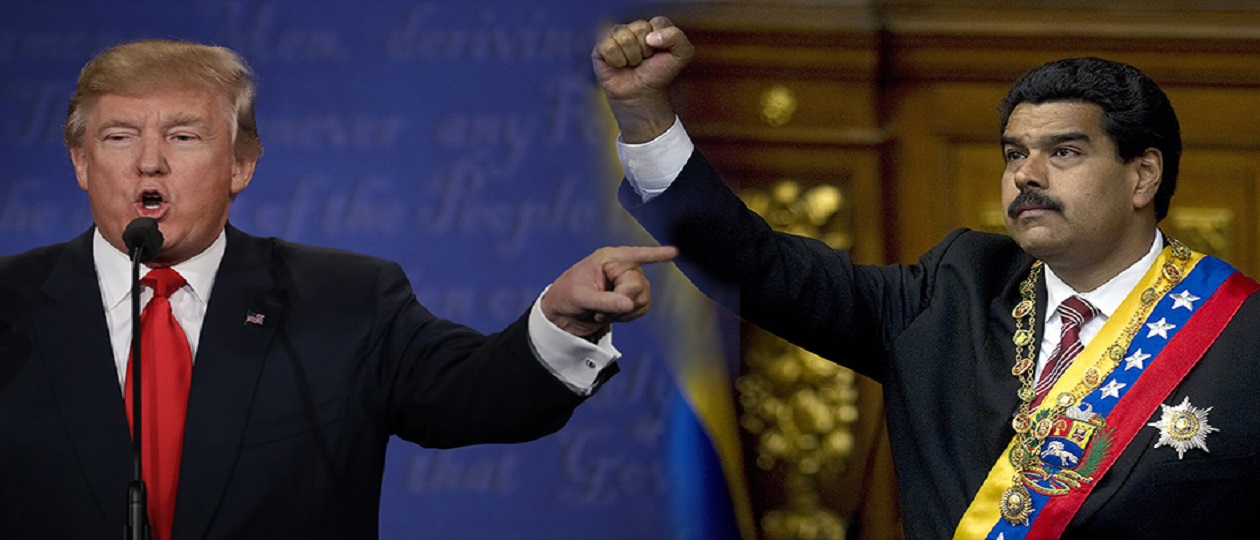
The story of what’s happening in Venezuela is unfolding quickly and big questions are mounting. The immediate danger in Venezuela (and potentially in Columbia and Cuba) is chaos.
Trump said, “We are going to run the country until such time as we can do a safe, proper and judicious transition,” and that “we can’t take a chance that somebody else takes over.” He also said the United States was “ready to stage a second and much larger attack if we need to do so,” adding: “We are not afraid of boots on the ground if we have to.”
What the hell does this blaster really mean?
U.S. troops are not prepared to occupy Venezuela. Trying to do so would be a disaster.
Maduro was entrenched there. His system of oppression still is. It includes the national guard, the army, the national police, the intelligence service, and the Colombian guerrilla group ELN. All remain intact.
Maduro’s top lieutenants also remain there, including several who were involved in his alleged crimes. Not to mention Maduro’s thugs and narco-traffickers who have been controlling Venezuela through violent repression and stealing elections.
Venezuela has roughly 28 million people. There’s no way to determine the emerging balance of power between pro- and anti-Maduro camps, but it’s a safe bet that any power void will be filled with violence.
Today, Secretary of State Marco Rubio spoke of “coercing” the Venezuelan government to make policy changes over its oil reserves, rather than “running” the country. American forces will prevent oil tankers from entering and leaving Venezuela until the government opens up the state-controlled oil industry to foreign investment — presumably giving priority to American companies.
But since August, America has had an arsenal of warships, jet fighters, and some 15,000 troops on Venezuela’s doorstep, which hasn’t stopped all oil shipments. How big must the arsenal be? How long will it remain there? At what cost? Will we bomb Russian and Chinese tankers?
Rubio emphasized that “the national interest of the United States… is No.1.” But what exactly is the “national interest” of the United States? Just Big Oil? Hell, Chevron has been in Venezuela for years. Do we declare victory when Exxon-Mobil is there, too? Do we insist that Venezuela not charge America oil companies any extraction fees? How profitable must this business be for U.S. Big Oil?
Rubio says Trump hasn’t ruled out troops on the ground. But does anyone remember what happened in Iraq after the U.S. invasion there? Libya? Syria? How many failed states do we need to create before we understand their danger to the stability of an entire region of the globe?
Worse yet, we’re now fanning the flames of anti-Americanism, both in Venezuela and elsewhere in Latin America. In Delcy Rodriguez’s first remarks after Trump made her interim president, she condemned Maduro’s capture. “What is being done to Venezuela is a barbarity,” she said,” adding that Maduro is Venezuela’s “only president.”
Trump said today that if Rodriguez doesn’t cooperate, “she is going to pay a very big price, probably bigger than Maduro.”
Trump won’t consider anyone who “doesn’t cooperate.”
On Saturday, he spoke dismissively about Maria Corina Machado, who recently left Venezuela to accept the Nobel Peace Prize. “I think it’d be very tough for her to be the leader,” Trump said, even though international election experts say a candidate she supported, Edmundo González, beat Maduro by a wide margin in 2024. “She’s a very nice woman but she doesn’t have the respect.”
For Trump, “respect” means the power to bully. “America is respected again,” he gloated in his address to the nation on December 9. “Our nation is strong, and America is BACK.”
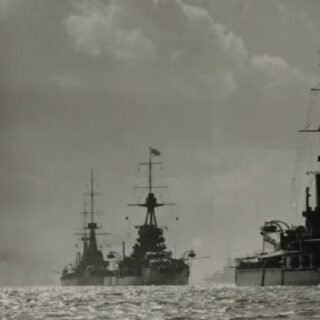
Wrong. Gunboat diplomacy is back.
 Yuri Chekalin
 Dmitri Drobnitsky
 Kamil Askerkhanov